Jumat, 31 Mei 2019

Solving The Tech Industry's Ethics Problem Could Start In The Classroom - NPR

Ethics is something the world's largest tech companies are being forced to reckon with. Facebook has been criticized for failing to quickly remove toxic content, including the livestream of the New Zealand mosque shooting. YouTube had to disable comments on videos of minors after pedophiles flocked to its platform.

Philosophy professor Abby Everett Jaques of the Massachusetts Institute of Technology created a class called Ethics of Technology to help future engineers and computer scientists understand the pitfalls of tech. Courtesy of Kim Martineau, MIT Quest for Intelligence hide caption

toggle caption
Courtesy of Kim Martineau, MIT Quest for Intelligence

Some companies have hired ethicists to help them spot some of these issues. But philosophy professor Abby Everett Jaques of the Massachusetts Institute of Technology says that's not enough. It's crucial for future engineers and computer scientists to understand the pitfalls of tech, she says. So she created a class at MIT called Ethics of Technology.

As artificial intelligence continues to creep into our lives, Jaques worries about privacy. She's especially concerned about facial recognition "tracking us continuously and pervasively."

Studies have already shown that facial recognition misidentifies dark-skinned people. Google came under fire when its photo app labeled black people as gorillas.

"I'm an ethicist, and I'm especially interested in these questions around ethics of things we make," Jaques says.

In one exercise, Jaques has her class of 30 students play a game that's designed to make them think about how to achieve fairness.

Jaques places a large paper bag at the front of the room. The students don't know its exact contents — only that there are treats inside. And they have to figure out how best to share them.

"All right, let's hear some ideas," Jaques tells the class.

One student suggests they dump everything out of the bag and figure things out from there. Another says they should put someone in charge of deciding what to do.

After considering a dozen ideas, the class votes to do it this way: Each student is randomly assigned a number and allowed to pick something based on their number once the bag is opened.

Jaques empties the bag. Turns out it was filled with assorted baked goods, including rice crispy treats and chocolate chip cookies.

One student has a concern: "Sorry, can we like determine who's vegan here?"

The class didn't account for different dietary needs. And that's exactly what Jaques wants the students to think about.

"Our system didn't protect a certain important minority," she says. "So we're trying to build in something afterwards [to account for that]."

That resonates with Cel Skeggs, a senior studying computer science:

"I've been the person throughout the semester beating the dead horse of 'How does this technology affect LGBTQ people?' " Skeggs says. "To the extent that some people have suggested solutions to things and then when that question's imposed, they're like, 'Oh, I didn't actually think about that thing at all.' "

This comes into play in real life too. For instance, some transgender Uber drivers were kicked off the app when a security feature couldn't recognize them. The feature required drivers to take a selfie to verify their identity but didn't account for people who are transitioning.

Srinivas Kaza, a computer science major, says learning about ethics has influenced what companies he's willing to work for. "I eliminated a lot of choices," he says and laughs.

Kaza says he wants to work with image technology, but he's really concerned about doctored photos and the spread of misinformation. "I think it's just important to not contribute to the problem," he says.

And that's exactly why Jaques created this class — for these students to understand that ethics is essential to their work as engineers and computer scientists.

"Companies better get ready because the students are going to be asking a lot of questions," she says.

Let's block ads! (Why?)


https://www.npr.org/2019/05/31/727945689/solving-the-tech-industrys-ethics-problem-could-start-in-the-classroom

2019-05-31 13:00:00Z
CAIiECCjtSM3hHCHULG1V5Biw9wqFggEKg4IACoGCAow9vBNMK3UCDCvpUk

Uber's earnings print inspires new bull - Seeking Alpha

[unable to retrieve full-text content]

  1. Uber's earnings print inspires new bull  Seeking Alpha
  2. Uber loses $1 billion in quarter as costs grow for drivers, food delivery  Yahoo Finance
  3. Uber lost more than $1 billion in the first quarter  CNN
  4. How Uber Hopes to Profit From Public Transit  The New York Times
  5. Uber loses $1 billion in quarter as costs grow for...  Daily Mail
  6. View full coverage on Google News

https://seekingalpha.com/news/3468261-ubers-earnings-print-inspires-new-bull

2019-05-31 13:10:00Z
52780306414688

Kamis, 30 Mei 2019

Wall St. pauses after trade tension-driven selloff - Investing.com

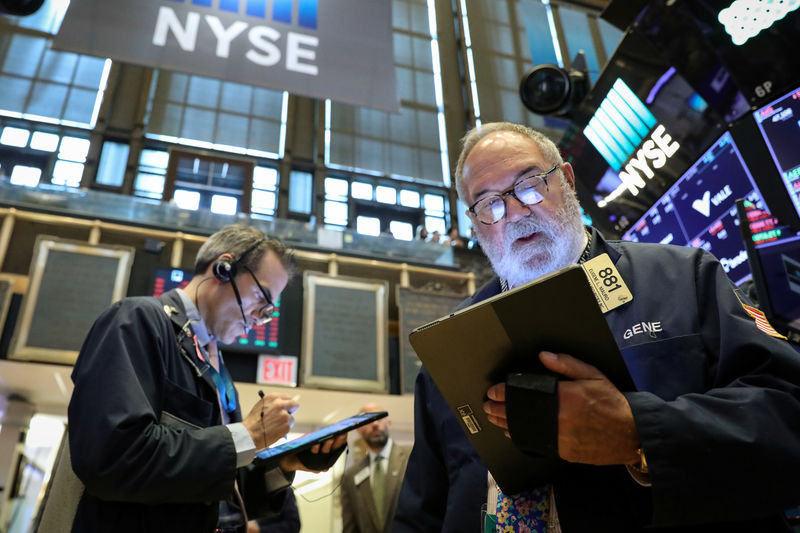
© Reuters. Traders work on the floor at the NYSE in New York © Reuters. Traders work on the floor at the NYSE in New York

By Amy Caren Daniel

(Reuters) - U.S. stocks rose for the first time this week on Thursday, as President Donald Trump said trade talks with China were going well, offering a glimmer of hope to markets roiled by worries that a protracted dispute would slow economic growth.

A senior Chinese diplomat said provoking trade disputes is "naked economic terrorism", even as Trump said Beijing wanted to make a deal with Washington.

The escalating dispute has weighed heavily on Wall Street this month, putting its main indexes on track for losses of more than 5% in May. The benchmark is now 5.9% away from its all-time high of 2,954.13 hit on May 1.

"The positivity in markets is very muted today, there are fractional gains," said Peter Kenny, founder of Kenny's Commentary LLC in New York.

"Uncertainty is still the primary driver on the trade front. We have increasingly seen the fear of uncertainty being priced into the market, and that is all about trade and the prospect of a slowdown."

Despite a tick up in U.S. treasury yields on Thursday, they still hovered near 20-month lows as investors sought safety in government bonds. [US/]

The yield curve between three-month bills and 10-year notes remained inverted, with money markets pricing in roughly two U.S. rate cuts by the start of next year.

Interest-rate sensitive bank stocks fell 0.54%, while the broader financial sector declined 0.24%.

Technology stocks, among the worst performing S&P sectors this month, rose 0.38% and boosted markets.

The sector was helped by a 9.6% jump in Keysight Technologies after the electronic measurement equipment maker reported better-than-expected quarterly results and announced a $500 million share buyback plan.

Apple Inc (NASDAQ:), Microsoft Corp (NASDAQ:) and Intel Corp (NASDAQ:) also rose and offered support.

Also helping sentiment was data that confirmed domestic economic growth accelerated in the first quarter, but there were signs that the temporary boost from exports and inventory accumulation was already fading.

At 11:10 a.m. ET the was up 6.11 points, or 0.02%, at 25,132.52. The S&P 500 was up 5.54 points, or 0.20%, at 2,788.56 and the was up 19.47 points, or 0.26%, at 7,566.78.

The energy sector fell 1.1%, the most among the four major S&P sectors trading lower.

Among other stocks, Dollar General Corp (NYSE:) jumped 6.8% after the discount retailer's same-store sales and profit topped expectations.

Viacom Inc climbed 4.8% after report that CBS Corp (NYSE:) is preparing for merger talks with the media company. CBS rose 2.7%.

PVH Corp (NYSE:) tumbled 14.3%, the most among S&P companies, after the Calvin Klein owner cut its annual profit forecast as it grapples with tariffs and slowing retail growth.

Advancing issues outnumbered decliners by a 1.45-to-1 ratio on the NYSE and by a 1.28-to-1 ratio on the Nasdaq.

The S&P index recorded one new 52-week high and 13 new lows, while the Nasdaq recorded 18 new highs and 69 new lows.

Let's block ads! (Why?)


https://www.investing.com/news/stock-market-news/futures-tick-higher-after-prior-sessions-selloff-1882964

2019-05-30 15:51:00Z
CBMiaWh0dHBzOi8vd3d3LmludmVzdGluZy5jb20vbmV3cy9zdG9jay1tYXJrZXQtbmV3cy9mdXR1cmVzLXRpY2staGlnaGVyLWFmdGVyLXByaW9yLXNlc3Npb25zLXNlbGxvZmYtMTg4Mjk2NNIBAA

Chinese man uses ramen instant noodles to 'repair' broken things - South China Morning Post

Let's block ads! (Why?)


https://www.youtube.com/watch?v=n3h1_j3XnjM

2019-05-30 15:00:07Z
CAIiEEo6RDsgwVhXf-A7ahoJxT0qGQgEKhAIACoHCAowief2CjCJ2dUCMLTZngU

Wall Street rises after trade-driven selloff - Investing.com

© Reuters. Traders work on the floor at the NYSE in New York © Reuters. Traders work on the floor at the NYSE in New York

By Amy Caren Daniel

(Reuters) - U.S. stocks rose for the first time this week on Thursday, as President Donald Trump said trade talks with China are doing well, offering a glimmer of hope to markets roiled by trade tensions.

A senior Chinese diplomat said that provoking trade disputes is "naked economic terrorism", even as Trump said Beijing wanted to make a deal with Washington.

The escalating trade war has weighed heavily on Wall Street, putting its main indexes on track for a monthly loss of more than 5% in May. The benchmark is now 5.7% away from its all-time high of 2954.13 hit on May 1.

"People are trying to figure out how much of the bad news is already priced in. The trade war looks like it might dampen growth but not enough to throw us into a recession," said Scott Brown, chief economist at Raymond James in St. Petersburg, Florida.

"There has been talk about the Fed possibly cutting rates and that is a little bit positive for the stock market."

Despite a tick up in U.S. treasury yields on Thursday, they were still at 20-month lows as investors sought safety in government bonds.

The yield curve between three-month bills and 10-year notes also remained inverted and money markets were pricing in roughly two U.S. rate cuts by the start of next year. [US/]

The technology sector, among the worst performing S&P sectors this month, rose 0.60%, and provided the biggest boost to markets.

The sector was helped by a 11% jump in shares of Keysight Technologies after the electronic measurement equipment maker's quarterly results topped estimates and the company announced a $500 million share buyback program.

Apple Inc (NASDAQ:), Microsoft Corp (NASDAQ:) and Intel Corp (NASDAQ:) rose between 0.3% and 1.3%, supporting the markets.

At 9:42 a.m. ET the was up 74.96 points, or 0.30%, at 25,201.37. The S&P 500 was up 12.02 points, or 0.43%, at 2,795.04 and the was up 32.96 points, or 0.44%, at 7,580.27.

Nine of the 11 major S&P sectors were trading higher, with only the energy and communication services sectors in the red.

Adding to the upbeat mood, the government confirmed domestic economic growth accelerated in the first quarter, but there are signs that the temporary boost from exports and inventory accumulation is already fading, and production at factories slowing.

Among other stocks, Citigroup Inc (NYSE:) rose 1.4% after Goldman Sachs (NYSE:) raised the bank's shares to "buy", as it expects the lender to achieve a higher return on equity in 2020.

Discount retailer Dollar General Corp (NYSE:) jumped 6.2% after the company reported quarterly same-store sales and profit above expectations.

PVH Corp (NYSE:) tumbled 12.1%, the most among S&P companies, after the Calvin Klein owner cut its annual profit forecast as it grapples with tariffs and slowing retail growth.

Advancing issues outnumbered decliners by a 3.25-to-1 ratio on the NYSE and by a 2.48-to-1 ratio on the Nasdaq.

The S&P index recorded no new 52-week high and six new lows, while the Nasdaq recorded eight new highs and 26 new lows.

Let's block ads! (Why?)


https://www.investing.com/news/stock-market-news/futures-tick-higher-after-prior-sessions-selloff-1882964

2019-05-30 14:24:00Z
52780306186478

Generate - May 30, 2019 - Axios

An electric ferry in France
An all-electric, zero-emission ferry in Lorient, France. Photo: Jean-Sebastien Evrard/AFP/Getty Images

Ships are the latest mode of transportation to see electric upgrades as the maritime industry faces increased pressure to reduce greenhouse gases, writes Axios Expert Voices contributor Maggie Teliska.

The big picture: Passenger ferries are ideal for electric propulsion using current battery technology, which can reduce water and air pollution while providing a quiet, vibration-free trip. Short routes with frequent stops along populated shorelines offer ample opportunities to charge the battery packs.

Where it stands: Globally, there were 185 battery-powered vessels operating or scheduled for delivery in 2018, 58 of which were passenger ferries. Norway introduced the first all-electric ferry, named the MF Ampere, in 2015 to shuttle passengers between villages in the fjords.

What's new: Maid of the Mist plans to launch 2 all-electric, zero-emission boats in September on the U.S. side of Niagara Falls — the first domestically built all-electric boats used for tourists in the U.S.

  • Washington State Ferries will introduce a 150-passenger hybrid ferry later this year in Puget Sound that runs on both diesel and battery power, using up to 60% less fuel than diesel counterparts. 
  • Also this year, New York City plans to introduce a 150-person ferry to shuttle commuters across the East River, from Brooklyn to Manhattan.

Read more

Teliska is a technical specialist at Caldwell Intellectual Property Law and CTO of Regent Power. She is also a member of GLG, a platform connecting businesses with industry experts.

Let's block ads! (Why?)


https://www.axios.com/newsletters/axios-generate-381c9392-75df-476d-834f-f01e216b3a55.html

2019-05-30 12:33:50Z
52780305332490

Investors Brace for a New Cold War That Will 'Last Our Careers' - Bloomberg

[unable to retrieve full-text content]

  1. Investors Brace for a New Cold War That Will 'Last Our Careers'  Bloomberg
  2. Ray Dalio warns China restricting rare earth metals would be 'major escalation' of trade war  CNBC
  3. Stocks Have Had Enough Of The Bond Rally  Seeking Alpha
  4. Dalio Sees a 'Risky Time' Ahead in U.S.-China Trade Conflict  Bloomberg
  5. Ray Dalio says brinksmanship is pushing U.S.-China conflict to a ‘risky’ level  MarketWatch
  6. View full coverage on Google News

https://www.bloomberg.com/news/articles/2019-05-30/investors-brace-for-a-new-cold-war-that-will-last-our-careers

2019-05-30 09:10:00Z
52780305807892

Safe Or Scary? The Shifting Reputation Of Glyphosate, AKA Roundup - NPR

John Draper pours glyphosate into the tank of his sprayer at the University of Maryland's Wye Research and Education Center. Dan Charles/NPR hide caption

toggle caption
Dan Charles/NPR

John Draper and I are sitting in the cab of a tractor on the research farm he manages for the University of Maryland, alongside the Chesapeake Bay. Behind us, there's a sprayer.

"So, away we go!" Draper says. He pushes a button, and we start to move. A fine mist emerges from nozzles on the arms of the sprayer.

We're spraying glyphosate, killing off this field's soil-building "cover crop" of rye before planting soybeans.

Farmers have been using this chemical, often under the trade name Roundup, for about four decades now.

But now it's under fierce attack, accused of causing cancer. In three civil cases so far, U.S. juries have ordered Roundup's inventor, Monsanto, now owned by Bayer, to pay enormous damages to cancer survivors. Thousands more lawsuits have been filed.

For this chemical, and for Monsanto, it's a stunning change in fortunes.

Farmers felt that they could spray glyphosate with a clear conscience. It doesn't persist in the environment as much as, say, DDT did. It doesn't build up in groundwater like another widely used herbicide, atrazine. And it's certainly less toxic than some alternatives.

"If we were spraying Gramoxone [the trade name for paraquat, another herbicide], even for you to be standing next to the sprayer, you'd have to have a respirator on. I'd have to wear a respirator even in the tractor, spraying," says Draper.

Monsanto started selling Roundup in 1974. For 20 years, it didn't attract much attention. That was Act 1 of the glyphosate drama: the quiet years.

Act 2 began in the late 1990s.

In 1996, Monsanto started selling genetically modified crops, or GMOs. They were modified so they could tolerate glyphosate. This meant that farmers could now spray this chemical right over their "Roundup Ready" soybeans, corn and cotton, and the crops would be fine but the weeds would all die.

It was a farming revolution built on glyphosate. Monsanto quickly became the world's biggest seed company. And farmers started spraying a lot more Roundup. Sales of the chemical increased more than ten-fold.

It all happened so fast that it scared a lot of people. There were anti-GMO protests around the world, and glyphosate came under increasing scrutiny.

A pedestrian walks past anti-glyphosate art in Popayán, Colombia. Glyphosate has been deployed in Colombia to wipe out coca and poppy crops. Dan Charles/NPR hide caption

toggle caption
Dan Charles/NPR

The International Agency for Research on Cancer, part of the World Health Organization, decided to carry out a new assessment of glyphosate's risks.

On March 20, 2015, IARC announced its conclusion: Glyphosate is "probably carcinogenic to humans."

That conclusion rests on three kinds of studies. First, IARC found "strong evidence" that glyphosate can damage DNA in cells. This kind of damage, inducing mutations, is the first step in causing cancer. Second, there are studies showing that when mice ate glyphosate, they got more tumors. Kate Guyton, a senior toxicologist at IARC, told reporters at a news conference that "these two studies gave sufficient evidence of cancer in animals."

Finally, IARC says there's "limited evidence" that people exposed to glyphosate had higher rates of a particular kind of cancer — non-Hodgkin lymphoma.

Guyton has been studying the causes of cancer for decades. Nothing she has ever done, she says, provoked as much of a reaction as the glyphosate announcement. "The Internet kind of exploded," she says.

Anti-GMO groups felt vindicated. Monsanto's top executives were furious and launched a public relations campaign attacking IARC and its report.

And in the small town of Orange, Va., a personal injury lawyer named Michael Miller started lining up clients — people with non-Hodgkin lymphoma who'd used Roundup. "I decided that these people needed a voice in the courtroom," he says.

The scientific picture got more complicated, though. Other government agencies, including the U.S. Environmental Protection Agency and the European Food Safety Authority, took a fresh look at glyphosate. And they concluded that it probably is not giving people cancer.

David Eastmond, a toxicologist from the University of California, Riverside, helped conduct one of these glyphosate reviews for another part of the World Health Organization, the Joint FAO/WHO Meeting on Pesticide Residues.

"From my reading of things, if glyphosate causes cancer, it's a pretty weak carcinogen, which means that you're going to need pretty high doses in order to cause it," he says.

Eastmond says that there are several reasons for this apparent disagreement between IARC and the other agencies.

First, IARC just looks at whether glyphosate can cause cancer; regulators, on the other hand, have to decide whether it actually will, considering how much of it people are exposed to.

Second — and most important, according to Eastmond — different agencies considered different evidence. Eastmond's committee and regulatory agencies like the EPA considered a large number of studies that aren't publicly available because Monsanto paid for them and submitted them to the agencies. "I have never seen a chemical with as many animal cancer studies as glyphosate," Eastmond says.

IARC, however, didn't look at most of this research because it accepts only studies that are publicly available. This allows any other scientist to see exactly what IARC's conclusions are based on.

Eastmond, for his part, thinks company-financed studies are credible and valuable, despite the potential conflict of interest for companies carrying out those studies. The labs, he says, have to follow strict guidelines.

Finally, scientists sometimes look at the same data and disagree about what it means. Eastmond says that he and Guyton had "animated discussions" about some of the data. "We just evaluated the evidence differently, but, you know, these are honest disagreements [among] people who I think are well-meaning," Eastmond says.

Then Act 3 arrived. Glyphosate went to court. There were three civil trials in or near San Francisco.

Lawyers for Bayer, which now owns Monsanto, repeatedly reminded jurors that regulatory agencies had concluded that glyphosate is not a cancer risk.

Lawyers for the cancer victims, though, suggested that those same regulators couldn't be trusted because they'd been manipulated or fooled by Monsanto.

Miller and his legal team showed the juries a whole collection of internal Monsanto emails. In one, company executives described phone calls with an official at the EPA. As Miller describes it, the official said, "I don't need to see any more studies. I'm going to declare Roundup safe, and I'm going to stop another agency from looking at it."

Another Monsanto executive discussed ghostwriting papers on glyphosate's safety that scientists could publish under their own names.

"I think the jury was rightfully offended," Miller says.

All three trials ended with resounding verdicts in favor of the cancer victims. The juries ordered Bayer to pay huge punitive damages. In the most recent case, the damages totaled $2 billion.

Bayer is appealing these verdicts — and the damages probably will be reduced. But more lawsuits are waiting. The total value of Bayer's stock has fallen $40 billion since the first verdict was announced.

Alexandra Lahav, a professor at the University of Connecticut School of Law, says that one lesson of this case so far is that attempts to get favorable decisions from regulators can backfire in court.

"They then open themselves up for the jury to say, 'Wait a minute — you're trying to convince the regulator not to regulate you, and now you want me to believe that the regulator is completely objective,' " Lahav says.

When regulators are seen as weak or ineffectual watchdogs, she says, their seal of approval also carries less weight with the public — and with juries.

The next glyphosate trial is set for August in St. Louis.

Let's block ads! (Why?)


https://www.npr.org/sections/thesalt/2019/05/30/727914874/safe-or-scary-the-shifting-reputation-of-glyphosate-aka-roundup

2019-05-30 09:00:00Z
52780305965488

'Molecules of freedom': US Energy Department tries rebranding natural gas - ABC News

Let's block ads! (Why?)


https://abcnews.go.com/Politics/molecules-freedom-us-energy-department-rebranding-natural-gas/story?id=63366255

2019-05-30 07:47:00Z
52780305332490

Fears of prolonged trade war weigh on Asia stocks; bonds rally - Investing.com

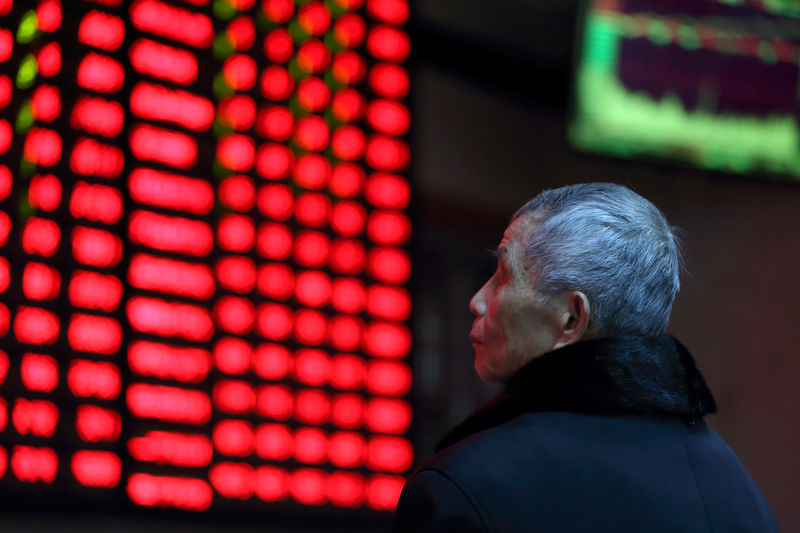
© Reuters. A man looks on in front of an electronic board showing stock information at a brokerage house in Nanjing © Reuters. A man looks on in front of an electronic board showing stock information at a brokerage house in Nanjing

By Shinichi Saoshiro

TOKYO (Reuters) - Asian stocks tracked Wall Street losses on Thursday as the latest exchanges between Beijing and Washington signaled the heightened risk of a prolonged trade war, stoking investors' concerns about the impact on global economic growth.

European stock futures were higher in early trade, trimming some losses after falling sharply the previous day. The pan-region were up 0.46%, German edge up 0.34% and futures gained 0.25%.

"We oppose a trade war but are not afraid of a trade war. This kind of deliberately provoking trade disputes is naked economic terrorism, economic chauvinism, economic bullying," Chinese Vice Foreign Minister Zhang Hanhui said, when asked about the trade war with the United States.

His comments followed reports from Chinese newspapers that Beijing could use rare earths to strike back at Washington after U.S. President Donald Trump remarked he was "not yet ready" to make a deal with China over trade.

As investors switched out of equities, safe-haven assets such as government bonds found favor, with yields on German benchmark debt approaching record lows.

The fell 0.7% and Hong Kong's lost 0.4%.

Japan's was down 0.5% and Australian stocks shed 0.85%.

MSCI's broadest index of Asia-Pacific shares outside Japan slipped to a fresh four-month low before finding a bit of traction to edge up 0.1%.

"The equity markets are in the midst of pricing in a long-term trade war, with participants shaping their portfolios in anticipation of a protracted conflict," said Soichiro Monji, senior strategist at Sumitomo Mitsui DS Asset Management.

"The upcoming G20 summit could provide the markets with relief, as the United States and China could use the event to begin negotiating again over trade."

The G20 meeting is set for June 28-29 in Japan.

Observers elsewhere expressed less optimism toward the G20 meeting.

"It seems to us that a Trump-Xi meeting on the sidelines of the G20 meeting is more wishful thinking than hard political reality," wrote Marc Chandler, chief market strategist at Bannockburn Global Forex. "This is a moment that defines before and after."

Amid the flight-to-safety, Germany's 10-year bond yield fell to a three-year trough of minus 0.179% overnight. A drop below minus 0.200% set in 2016 would take the yield to a record low.

Spanish and Portuguese 10-year yields fell to record lows as deeply negative German Bund yields have encouraged investors to look elsewhere for returns. [GVD/EUR]

The stood at 2.267% after falling to a 20-month low of 2.210% on Wednesday.

Notwithstanding lower Treasury yields, the against a basket of six major currencies was steady at 98.085 and in reach of a two-year peak of 98.371 set last week, with the greenback serving as a safe haven.

The euro was a shade higher at $1.1137, pulling back slightly following three successive days of losses.

The dollar was little changed at 109.660 yen after bouncing back from a two-week low of 109.150 brushed on Wednesday.

Oil prices rose modestly after an industry report showed a decline in inventories that exceeded analyst expectations.

The rise followed volatile trading on Wednesday, when oil prices fell to near three-month lows at one point as trade war fears gripped the commodity markets.

U.S. crude futures were up 0.66% at $59.20 per barrel after brushing $56.88 the previous day, their lowest since March 12.

added 0.37% to $69.71 per barrel.

Trade worries have weighed on oil but supply constraints linked to the Organization of the Petroleum Exporting Countries' output cuts and political tensions in the Middle East have offered some support.

Let's block ads! (Why?)


https://www.investing.com/news/stock-market-news/fears-of-prolonged-trade-war-weigh-on-asia-stocks-bonds-rally-1882426

2019-05-30 05:43:00Z
CBMidmh0dHBzOi8vd3d3LmludmVzdGluZy5jb20vbmV3cy9zdG9jay1tYXJrZXQtbmV3cy9mZWFycy1vZi1wcm9sb25nZWQtdHJhZGUtd2FyLXdlaWdoLW9uLWFzaWEtc3RvY2tzLWJvbmRzLXJhbGx5LTE4ODI0MjbSAQA

Rabu, 29 Mei 2019

Apparel retailers Canada Goose, Abercrombie & Fitch and others are getting whacked - CNBC

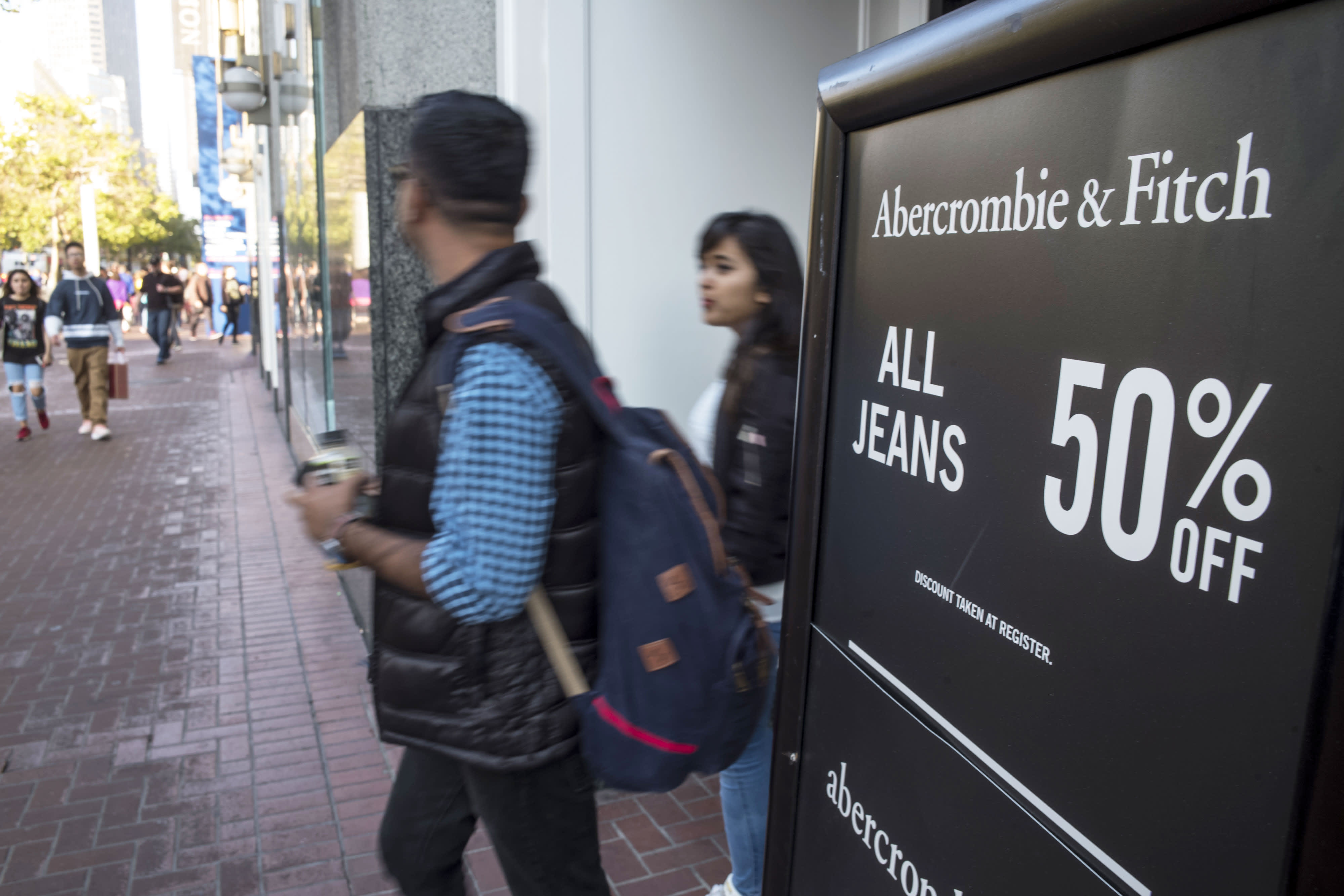
Customers exit an Abercrombie & Fitch store in San Francisco, California.

David Paul Morris | Bloomberg | Getty Images

Retail stocks are taking a beating Wednesday, hurt by a handful of poor earnings reports and the looming threat of tariffs on clothing imported from China.

Canada Goose shares lost more than a quarter of their value after the company said sales growth in the coming three years wouldn't be as robust as in the past. Abercrombie & Fitch shares were down nearly 25% as momentum cooled off at its Hollister brand during the latest quarter. That news also sent shares of rival teen apparel retailer American Eagle down about 5%. And Michael Kors owner Capri Holdings' stock fell about 10% as it's suffering from poor demand for its handbags.

"This is not a space deemed to be very healthy in terms of long-term outlooks for investors," Wells Fargo retail analyst Ike Boruchow said. "You've got a group where the fundamentals are weakening."

Then you throw in the idea of 25% tariffs on apparel and footwear, as the White House has proposed in its ongoing trade war with China, "and that's a real earnings problem," he said.

Abercrombie CFO Scott Lipesky told analysts on a post-earnings conference call the retailer hasn't yet baked additional tariffs into its earnings outlook. Abercrombie imported about 25% of its merchandise receipts from China to the U.S. in fiscal 2018.

"We're still dealing in the world of hypothetical here," he said. "We remain very engaged with our sourcing partners. ... We have a playbook in place if the hypothetical becomes reality."

With all of the losses in the space, the S&P 500 Retail ETF (XRT) was down nearly 3% by Wednesday afternoon, on pace for its fifth consecutive day of declines for the first time since Nov. 20. This also makes an eight-day-long losing streak for the XRT and puts it on pace for its worst day since May 13, when it lost 3.76%.

Boruchow said there are less signs that consumers are pulling back but more that "parts of the industry" are weakening. High-end handbag makers are struggling as tourism drops off, for example, and some mall-based apparel retailers are seeing sales slow as more women opt to shop on platforms like Stitch Fix and Rent the Runway.

Department store chains Kohl's, J.C. Penney and Nordstrom recently showed they aren't immune to these trends, either, sparking a sell-off in the space just last week with their dismal quarterly earnings reports.

Dick's Sporting Goods was one bright spot of Wednesday morning, reporting fiscal first-quarter earnings that topped Wall Street estimates and raising its outlook for the full year. But its stock reversed course from earlier gains and was last down more than 5%, falling with the rest of the industry.

Looking at the 20 worst performing stock among the S&P 500 year to date, a whopping seven are retailers: Nordstrom shares are down 30%, Macy's stock has dropped 29.5%, Walgreens shares have lost 25.3%, Kohl's stock is down 23%, Foot Locker's stock has dropped 21.6%, CVS shares are down 20% and Gap shares have lost 19.3% so far this year.

— CNBC's Gina Francolla contributed to this reporting.

Let's block ads! (Why?)


https://www.cnbc.com/2019/05/29/apparel-retailers-are-getting-whacked.html

2019-05-29 17:48:33Z
52780304804146

Huawei is challenging its US contracting ban as unconstitutional - The Verge

On Tuesday, Huawei filed a legal motion challenging a government ban on its equipment as unconstitutional. It’s the latest effort by the Chinese tech company to push back against policies limiting its global reach.

Huawei is currently struggling with an existential threat to its business after the US Commerce Department blocked the company from contracting with US companies without government approval. The ban, instituted earlier this month, has already forced companies like Google to suspend work with the Chinese tech giant.

That order is just the latest effort by the US government to push Huawei out of the country. Before the wider ban, Congress passed a law barring Huawei products from use in the government, labeling them a potential security threat. That ban not only blocked government agencies from using the products, but any contractors hoping to score lucrative government contracts also had to drop Huawei equipment. Facing the ban, Huawei filed a lawsuit against the US in March, saying the action was unconstitutional.

That suit is still ongoing, and we now have more insight into Huawei’s legal argument through a motion filed last night, which sketches out why the company believes the government ban should be nullified. The motion asks a court to rule directly as a “summary judgment.”

As legal experts anticipated, Huawei is arguing that the government ban is “a bill of attainder.” Under the constitution, Congress is forbidden from passing laws that target specific people, and Huawei says the ban qualifies.

In the document filed by Huawei — which starts with a quote from James Madison — Huawei says Congress overstepped the law when it passed legislation that imposed the ban. Huawei was singled out by name in the defense budget, which included the ban, and the company says the measure “denies Huawei any procedure for providing rebuttal” to the decision. In soaring language, Huawei’s attorneys argue the legislation “produces the very tyranny which the Framers feared” and should therefore be ruled unconstitutional.

The US government has repeatedly argued that Huawei equipment could be used by the Chinese government to spy on American networks and that banning companies like Huawei is well within its national security powers. (Huawei has denied that its tech could be used to spy on the US.)

The company points to precedent reaching back to the Civil War and Cold War when the courts struck down actions against former Confederate soldiers and members of the Communist Party. The Huawei ban, the company says, is similarly “selective” and “punitive”: it “imposes the kind of permanent disability on serving the Government and/or pursuing the avocation of one’s choice that has historically been viewed as punishment.”

Huawei, the company says, has been branded “disloyal” through an act of legislation, rather than having an opportunity to make its case in the courts. This has also deprived it of due process under the law, it argues.

The company’s case faces a number of challenges. After concerns over cybersecurity, the US instituted a federal ban on software from Russia-based Kaspersky Lab, a clear precedent to the Huawei order. Kaspersky also filed a legal challenge, arguing that the government had created a bill of attainder, but the government prevailed in court. In general, the courts have given wide latitude to the government on national security issues, rendering Huawei's legal prospects uncertain.

The wider ban, which affects sales of American products to Huawei, raises its own set of legal issues. Whether Huawei will also take legal on that front remains to be seen, but this week's legal maneuvering gives some indication of what the arguments in that case could look like. (As trade negotiations with China continue, Trump has suggested the Huawei ban could be lifted as part of a deal, raising questions about the administration’s national security rationale.)

In a statement accompanying the motion, Huawei's chief legal officer said the continuing crackdown “sets a dangerous precedent.”

“Today it’s telecoms and Huawei,” he said. “Tomorrow it could be your industry, your company, your consumers.”

Let's block ads! (Why?)


https://www.theverge.com/2019/5/29/18644040/huawei-government-ban-lawsuit-policy-unconstitutional

2019-05-29 15:24:50Z
52780305324146

Canada Goose Stock, Capri Stock, Abercrombie & Fitch Dived On Earnings Reports - Investor's Business Daily

[unable to retrieve full-text content]

  1. Canada Goose Stock, Capri Stock, Abercrombie & Fitch Dived On Earnings Reports  Investor's Business Daily
  2. What's moving markets today: Live updates  CNN
  3. Abercrombie & Fitch to close 3 more flagship stores as company shares drop  Fox Business
  4. Abercrombie & Fitch Sinks Following Same-Store Sales Miss  TheStreet.com
  5. Abercrombie & Fitch tanks 23% on weak same-store sales, says 3 big flagship stores to close  CNBC
  6. View full coverage on Google News

https://www.investors.com/news/canada-goose-earnings-canada-goose-stock-capri-earnings-vfc-earnings/

2019-05-29 15:00:00Z
52780304804146

It's Going to Happen, Isn't It? - Jalopnik

When we first heard about The Who’s Left Merger, it was that Fiat Chrysler was pushing for it, and like all things FCA, we viewed it with as much skepticism as we would, say, our friend telling us they were getting a great deal on a Dodge Journey. But as the days roll on, things are looking increasingly serious. All that and more in The Morning Shift for May 29, 2019.

1st Gear: Renault: You Love It, Don’t You? Nissan: We Are Not Not Loving It.

Here are three pieces of news rolled into one. The first is that Renault has gone to the trouble of flying to Japan to chat with longtime alliance partner Nissan about the latter’s possible merger with Fiat Chrysler. This can only mean one thing, as Bloomberg reports: Renault is down to clown.

B’Berg’s story ran today under the headline “Renault’s message to Nissan: Fiat deal is good for all of us” and here’s a little bit:

Renault SA Chairman Jean-Dominique Senard arrived in Tokyo with a crucial mission: to sell the proposed merger between Fiat Chrysler Automobiles NV and Renault SA to longtime partner Nissan Motor Co.

[...]

While neither party has disclosed what will be discussed, there will be plenty to talk about. Under the terms of the Fiat proposal, Nissan will gain voting rights of 7.5% in the new entity, compared with no voting rights attached to its cross-held shares in Renault. A merger would also dilute the French state’s control over Renault, and indirectly over Nissan, easing a concern the Japanese company has had for years.

Senard’s goal is to ensure that they all work well together. Although Nissan and Renault have been partners for two decades, the Japanese automaker isn’t in a position to block the deal. Nissan doesn’t own a controlling stake in the French company, and a merger wouldn’t breach their operating agreement.

Advertisement

Bloomberg couldn’t get comment from Nissan for the story, but the Nikkei got some goss, as reported by Reuters today:

“We are not opposed,” the Nikkei quoted an unnamed Nissan source who had attended the meeting as saying. The person also said “many details need to be worked out” before the Japanese automaker solidifies its position on the issue, the Nikkei reported.

In a statement, the alliance members confirmed that they had “an open and transparent discussion” on the proposal. The deal looks designed to tackle the costs of far-reaching technological and regulatory changes, including the drive toward electric vehicles.

Advertisement

In any case, the two sides are meeting on Monday, as the Financial Times reports. I wish them all well in this definitely well-thought-out merger that makes sense to everyone and doesn’t seem like desperation.

2nd Gear: Of Course Wall Street Loves a FCA-Renault-Nissan Merger For Every Wrong Reason

Wall Street never met a budget it couldn’t slash, and unsurprisingly it is loving the prospect of trimming the fat on five carmakers at once, as The Detroit News reports today:

A potential merger between Fiat Chrysler Automobiles NV and Renault SA would create a massive global company, but it’s the cost cuts proposed by FCA that has investment analysts optimistic about the deal.

The proposed 50-50 merger between the Italian-American Fiat Chrysler and France’s Renault would create the third-largest automaker in terms of sales, behind Volkswagen AG and Toyota Motor Corp. It’s a move that would also save some $5.6 billion (5 billion euros) annually for the companies as they find ways to cut costs in manufacturing, purchasing and R&D.

Advertisement

Hold on, wait, there’s a better quote in here, from Moody’s, which just upgraded FCA to its highest level of junk status, as the Detroit News notes. Take in this fantastic line, which says in as many words as possible that this is going to be a giant mess but they’ll slash costs and we’ll make out like bandits:

“Combining Fiat Chrysler and Renault would be credit-positive in general as it makes strategic sense and could create a substantial amount of synergies,” Falk Frey, senior vice president and auto analyst at Moody’s, said in a Tuesday note. “However, we’ll also consider significant execution risks of such a large scale transaction given the complexity of the two group’s businesses’ operations, particularly in view of Renault’s existing alliance with Nissan Motor Co. Ltd and Mitsubishi Motors Corporation.”

Now, there was some nice analysis from automotive journalist and friend of Jalopnik John Voelker, who noted that, yes, it sounds evil to salivate about “a substantial amount of synergies,” but there really is still a lot of pointless fat in the auto industry today:

Advertisement


Personally I would love to see the auto industry as it stands today change entirely, moving from these giant silo’d giants into tons of tiny manufacturers, all putting together different combinations of licensed engines or electric modules on widely available skateboard chassis, like we had over a hundred years ago.

3rd Gear: Infiniti Returning To Japan After Ghosn Moved It To Hong Kong

I’m going to be completely honest, I totally forgot this happened.

For some reason Carlos Ghosn moved Infiniti’s headquarters to Hong Kong back in 2012 in an effort to make it more in his image, I mean, more international. Anyway, with Ghosn gone, Infinti is packing up its pencils once more, as Bloomberg elaborates in a wire report:

Ghosn in 2012 planned to more than triple Infiniti’s annual sales to 500,000 units within five years to raise its share of the global luxury car market to 10%. The brand sold less than half of the target last year.

Hurt by slumping U.S. sales, aging vehicle models and an out-of-sync product cycle, Nissan reported its lowest annual profit in a decade for the fiscal year through March. Chief Executive Officer Hiroto Saikawa is working on reviving profits, pledging to lift Nissan out of a “rock bottom” in two years. Infiniti currently has 180 employees based in Hong Kong, mostly in management, sales and marketing positions.

Advertisement

The report further noted that Infinti is planning on dumping its diesels and focusing on EVs and China, which is what you could also call the “doing what Tesla has been trying to do for years now” plan of action.

4th Gear: China Considering Subsidizing EV Charging

China has been somewhat vocal in saying it’s rolling back on subsidizing its budding electric car hegemony, but apparently someone in power didn’t get the message, as noted in a Bloomberg wire report today:

China is scaling back subsidies on EV purchases and plans to phase them out completely after 2020 amid concerns that automakers have become overly reliant on them at the expense of developing new technologies. The funding offered on purchases will be diverted to develop charging infrastructure, industry minister Miao Wei said in March.

China, which has about 960,000 charging poles for its 2.31 million electric vehicles, is working to upgrade the network. The new standards will boost the capacities of facilities about sixfold to more than 350 kilowatts, making re-charging as efficient as a filling a regular fuel tank, Liu [Kai, a director with the Information and Certification Department of the China Electric Vehicle Charging Infrastructure Promotion Alliance] said.

Advertisement

There’s a part of me that worries about this. I don’t love the idea that the fate of EVs may hinge upon a government program, one that could change at any time, but any little bit helps and it’s not like consumers are any less fickle, buying gas guzzlers the moment fuel prices drop.

5th Gear: In New Era Of Auto Layoffs, It’s Hard To Tell Who Looks Worse: Detroit or Washington

I love everything about this incredibly obvious analysis from The Washington Post, which seems to have just now woken up to realize Detroit has been slashing jobs while budgets have been fat, and Trump hasn’t been helping anything:

[T]here’s another pillar of Trump’s base — the auto industry, which he promised to transform into the engine of a manufacturing revival — that is stalling at an inopportune moment for the president.

Layoffs in the industry this year are at their highest since the economic crisis a decade ago[.]

Advertisement

The piece focuses on Trump not fulfilling his promises of helping out the auto industry, which, ha, but I think you can’t look at this without putting a great deal of blame on companies like GM for shutting down whole factories when we’re not even in a recession.

Reverse: This Was More Recent Than You’d Wish

Advertisement

Neutral: What Do You Call The Potential Fiat-Chrysler-Renault-Nissan-Mitsubishi Conglomerate?

Is it the Who’s Left Merger? Is it the Merger To Restore Balance, as with one new auto company entering the fray (Tesla) another must presumably be absorbed? Is It The Merger Of Equals But For Real This Time? Your thoughts are welcome.

Let's block ads! (Why?)


https://jalopnik.com/its-going-to-happen-isnt-it-1835089827

2019-05-29 14:04:00Z
52780305656884

Huawei asks court to declare US government ban unconstitutional - Engadget

Sponsored Links

HECTOR RETAMAL/AFP/Getty Images

Huawei is stepping up its fight against American bans. The tech giant has motioned for a summary judgment in its lawsuit to invalidate Section 889 of the 2019 National Defense Authorization Act, arguing that it violates the "Bill of Attainder, Due Process and Vesting" clauses of the US Constitution. The law explicitly bans Huawei by name despite "no evidence" of a security risk, Huawei's Song Liuping said, and bans third-party contractors who buy from Huawei even when there's no link to the US government.

The company also preemptively tried to dismiss claims that there are facts up for dispute. This is a simple "matter of law," according to lead counsel Glen Nager.

A hearing on the motion is due September 19th.

This won't get Huawei off the Commerce Department's Entities List, which forced US companies to stop doing business with the Chinese firm. It would alleviate some of the pressure on the company, though, and would theoretically provide a route back to doing more business in the US if it's ever removed from the Entities List. It could also push the US to provide evidence (if there is any) to support the measure. If nothing else, it signals that Huawei won't take bans lying down.

Let's block ads! (Why?)


https://www.engadget.com/2019/05/29/huawei-asks-for-summary-judgment-vs-us/

2019-05-29 13:37:20Z
52780305324146

What's moving markets today: Live updates - CNN

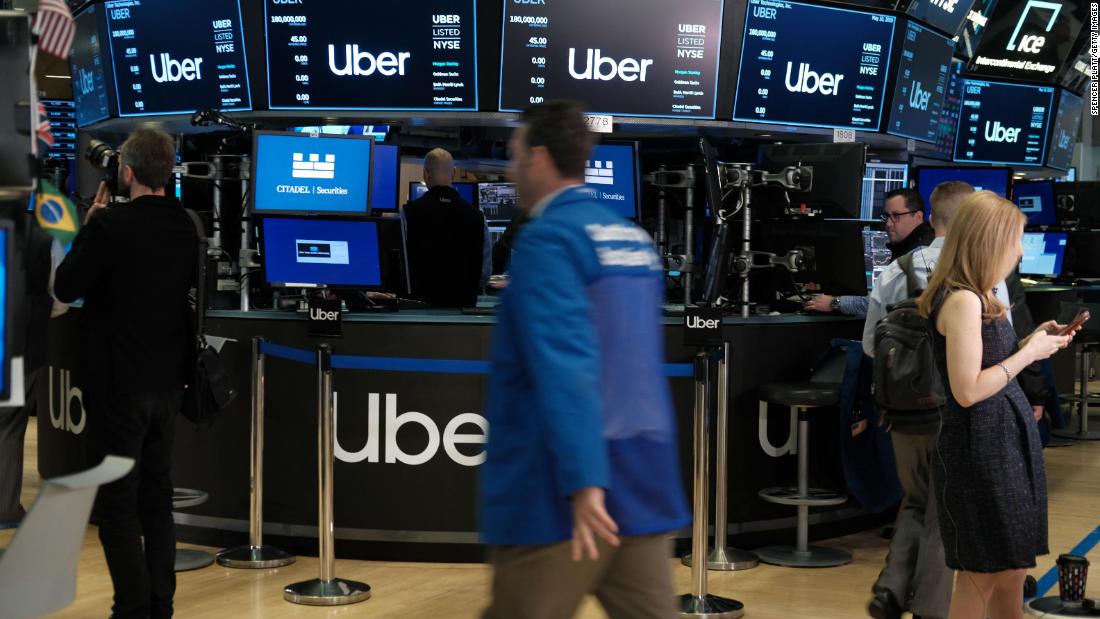
Despite Uber's less-than-impressive performance after going public, one analyst remains optimistic on the company.

Wedbush Securities' Daniel Ives said in a new note that that despite the "negative noise," he remains positive on Uber (UBER).

The company went public earlier this month and is trading 9% below its $45 IPO price

"This week marks an important step forward for Dara & his team to prove to the Street that this business model is still in the early days of playing out," Ives said of Uber's first earnings report, which comes out Thursday.

Ives admitted that it will be a "long and winding road for Uber" to prove its value, he's optimistic the company will successfully expand beyond ride-hailing:

A core tenet of our bull thesis is around Uber's ability to morph its unrivaled ridesharing platform into a broader consumer engine with Uber Eats, Uber Freight, and autonomous initiatives 'just scratching the surface' of the full monetization potential."

Let's block ads! (Why?)


https://www.cnn.com/business/live-news/stock-market-news-today-052919/index.html

2019-05-29 13:28:00Z
52780304804146

Huawei USA security chief suggests the company could be open to 'mitigation measures' to address US national security concerns - CNBC

Andy Purdy, chief security officer at Huawei Technologies USA, signaled on CNBC Wednesday the Chinese telecom giant may be open to taking steps to address U.S. national security concerns.

"In different countries in the world, we negotiate with respective governments on what kind of assurance framework they need," Purty told "Squawk Box." Some measures, he said, might include requirements around selling to government or to critical infrastructure projects. While saying he cannot prejudge any possible conditions, Purdy said he would be "astounded if we weren't open to those kinds of risk mitigation measures. "

Purdy's appearance, along with Huawei outside counsel Glen Nager of Jones Day, comes as the China-based company looks to expedite its March lawsuit against the U.S., which alleges that a law banning U.S. government agencies from buying its equipment is unconstitutional. Huawei is seeking a so-called summary judgment in hopes of avoiding a full-blown trial.

Wednesday's comments from Purdy mirror ones that he made about two weeks ago, in which he said a risk-mitigation process for Huawei equipment, like those used in Europe, could have been simple.

The new Huawei filing stems from President Donald Trump's signing last year of a new U.S. defense act that strengthens the Committee on Foreign Investment. However, with the U.S. most recently stepping up pressure against Huawei — as part of trade and technology tensions with China — Trump earlier this month effectively blacklisted Huawei from doing business in the U.S.

Purdy, who formerly served as a top-ranking cybersecurity official for Homeland Security, said U.S. officials have not been "willing to talk" to Huawei. "The geopolitical context between the U.S. and China is why we're in this situation."

The Huawei attorney Nager said the Trump administration needs to "ramp down the rhetoric," adding that "the U.S. is worried more about the country China than the company Huawei."

Responding to a question about this weekend's Wall Street Journal report with the headline "Huawei's Yearslong Rise Is Littered With Accusations of Theft and Dubious Ethics," Purdy told CNBC, "I don't forgive acts that have happened in the past," he said. "Despite those, our allies have decided to push back on tremendous pressure from the U.S. government because they believe the national security threats can be addressed."

Huawei has maintained that it adheres to intellectual property rights, which along with national security is at the heart of the U.S. concerns about the company and about business practices at-large in China.

Let's block ads! (Why?)


https://www.cnbc.com/2019/05/29/huawei-usa-security-chief-addresses-us-national-security-concerns.html

2019-05-29 12:03:21Z
52780305324146

China has no good options for retaliating against Trump’s Huawei ban - The Verge

US president Donald Trump has made Huawei the biggest story in tech right now by banning it from doing business with US companies. Huawei, China’s tech champion, has lost access to Google’s Android and Intel’s chips, and it’s even seen other international partners like ARM and Panasonic bowing to American influence and discontinuing trade. Having previously been on track to becoming the world’s biggest smartphone maker, Huawei is now in such dire straits that the best metaphor its founder could come up with to allay fears is that the company is like a plane with a hole in its side: not doing great, but still up in the air.

Bludgeoning Huawei with the ban hammer is, by Trump’s own admission, a negotiating tactic to focus China’s attention on American discontent with the existing trade relationship between the two countries. It lands atop a pile of punitive 25 percent tariffs he’s imposed on many Chinese imports to the US, and a promised further round of such tariffs on practically every Chinese export imaginable.

Two expert China observers tell The Verge that China very much cares about these restrictions on its most important overseas market, and it has every incentive to respond, whether to alleviate the sanctions or as a show of its own economic strength. But both agree that China has few, if any, good options available.

Veteran diplomat Hosuk Lee-Makiyama asks pointedly, “What does China have left to retaliate with?” It’s already imposed tariffs on the few classes of goods for which it wants to protect its internal market, and it’s excluded American internet giants like Google and Facebook, so what can China realistically threaten to do as a counter measure? Some observers, such as Ben Thompson in Stratechery, note that “China took the first shots” in the present trade war when it threw out many US tech firms, and it is now the US who is finally responding.

Lowy Institute’s Elliott Zaagman has spent the past 10 years living in and observing China, and he argues that the country’s economic prosperity is more brittle than it first appears. China’s “already at a point where growth rate is not an output, it’s an input,” meaning the government sets the goal it wants to hit each quarter and banks lend to hit that number. Beijing has done more monetary expansion, he says, than the US Fed, the Bank of Japan, and the EU combined. This has spawned a number of toxic asset bubbles — such as in housing, which has had trickle-down consequences of people taking on debt backed by overpriced real estate. Talking to him and Lee-Makiyama, you get the sense that China’s economy is closer to a pyramid scheme than a truly thriving and flourishing giant.

Retaliation is particularly risky because China’s economy relies on ever increasing trade with the world, as evidenced by the massive Belt and Road Initiative to develop land and sea routes for faster transport of goods. And Huawei, though a privately held entity, has been very helpful in procuring high-value overseas business with its lead in network infrastructure, 5G equipment, and, most recently, premium smartphones. Lee-Makiyama notes that because the country lacks a social safety net, it cannot afford to ever take its foot off the gas, which is what the Huawei setback inevitably represents. Economists, he says, have long held 6.5 percent economic growth as the threshold below which China can’t dip if it’s to sustain its growing debt, and China reported 6.4 percent growth in the first quarter of 2019, before Trump’s harshest tariffs had taken effect.

It’s in this context that we must look at China’s apparently formidable arsenal of weapons it could deploy against the US.

There are also more sophisticated kinds of financial warfare. China holds a trillion dollars of US debt, which it could dump on global markets and thus trigger an interest rate spike for the US economy. The Washington Post’s Robert J. Samuelson explains the mechanics of this succinctly, however he argues that China would be doing almost as much harm to itself in the process. A slowdown in the US economy would lead to even less appetite for Chinese exports, the US dollar might also go down in value and make Chinese goods less appealing, and whatever US treasuries China is left with would also be worth less. This illustrates the inherent symbiosis between Chinese production and American consumption, which have together formed the backbone of the global economy over the past 20 years.

The most threatening retort since Huawei was turned into a trade pawn by Trump has been a visit by president Xi Jinping to a rare earths facility. This was a wordless reminder of China’s dominance in collecting and processing the rare earth minerals essential to every smartphone, laptop, hybrid car, and practically anything more advanced than a gas oven. The CEOs of two US headphone manufacturers tell The Verge that China is the only place to buy the neodymium magnets required for their products: one said China is the sole source, the other said it controls 95 percent of the market. If you struggled to wait a few weeks for those sweet new Powerbeats Pro to go on sale, try waiting months and months for an alternative source of magnets.

And yet, as my colleague James Vincent has already set out, rare earths are not the secret weapon China imagines them to be. They’re not all that rare, the response to Beijing hoarding its supply would be production becoming economically viable and ramping up elsewhere, and the ultimate outcome would be fewer jobs and fewer exports for China. Lee-Makiyama sees this as an untenable scenario and points to China’s ill-fated attempts to use rare earths as a trade cudgel in its dealings with Japan and the US in the past.

Finally, and most obviously, the Chinese government could just do the tit-for-tat response of imposing sanctions on American businesses operating within its borders. Even with some older-model iPhone assembly in India, the vast majority of Apple’s smartphone business is built on Chinese land. Chipmakers are even more dependent, as an analysis from HSBC finds that Apple compatriot Qualcomm has 65 percent of its revenue vulnerable to disruption in trade with China. Other US tech firms with similar exposure include Broadcom at 54 percent, Micron at 51 percent, and AMD, Intel, and Texas Instruments all pinning at least a quarter of their revenues on continuing trade with China.

US consumers can also be hit through impositions on brick-and-mortar retailers. Chinese imports account for 26 percent of Walmart’s merchandise, which is on the low end compared to a more typical number like Target’s 34 percent, according to UBS. Additional research by UBS says the Trump administration’s tariffs imposed on Chinese imports “could put $40 billion of sales and 12,000 stores at risk.” The American Apparel & Footwear Association calls the next round of tariffs “a self-inflicted wound that will be catastrophic for the nation’s economy.” If tariffs are catastrophic, what would a total ban from China look like? This is arguably the most effective weapon Beijing could wield in its negotiations with Washington, but the corresponding hit on Chinese trade would be every bit as disastrous.

In Lee-Makiyama’s estimation, no scenario that involves China cutting off or constricting business with the outside world will be palatable to the country economically. Even with its rapidly growing national consumer market, China is still in need of more consumers for its goods and services. And with Apple and its compatriots like Nike, General Motors, and Walmart employing millions of Chinese workers, Trump has the leverage he needs to play hardball. That situation won’t last long, the diplomat warns, and now might prove to be the last good chance for the US to lean on the mutual dependency it has with China. If the trade relationship remains as it is, China will eventually grow its way to be colossal both as producer and consumer, and then American influence would be null.

For the US, what’s at risk are company revenues and profits. The country’s broader economy may suffer, but Lee-Makiyama says few people would notice if the GDP growth rate dipped from 3 to 2 percent. The same contraction for China’s economy, he contends and Zaagman agrees, would be disastrous. This asymmetry is at the heart of why the Trump administration can afford to be self-destructive in its tariff regime while China cannot indulge in similar costs to score trade negotiation points.

The Chinese government was “definitely caught off guard” by the brusqueness of Trump’s actions, says Zaagman, which was “not anticipated at all.” That might explain why Beijing didn’t make fuller or better contingency plans for a situation like today. Then again, Xi might find consolation in the fact that the same surprise must also be reverberating inside the offices of US tech giants, as Asia economic observer Tony Nash, formerly of the Economist Intelligence Group, questions why American companies hadn’t diversified their manufacturing sooner. Their lack of preparedness may give China some reassurance that hostilities won’t escalate much beyond their current point without China firing back.

Without having a clear and coherent plan for its reaction, which neither Lee-Mikayama nor Zaagman believe Beijing is even close to right now, the best strategy for China is to do nothing material and maintain a “strong and silent” posture — which is exactly what the country is doing, commenting only to say that it “won’t flinch.”

The damage, “the stuff that saps one percent off GDP growth every year,” says Zaagman, has already been done. Silicon Valley investors are now looking for startups with reduced China exposure; big US tech manufacturers are exploring Vietnam, Mexico, and other potential production outlets; and China has found its prejudices that it can’t trust the US confirmed. Now that Trump has pulled the big red Huawei lever, China is wise to avoid hurriedly mirroring the move. Then again, it’s not like it has much choice.

Let's block ads! (Why?)


https://www.theverge.com/2019/5/29/18637291/huawei-ban-trump-trade-war-china-united-states-tariffs

2019-05-29 12:00:00Z
52780305137219