Sabtu, 31 Agustus 2019

China's factory activity shrinks for 4th month as trade woes deepen - CNBC

Workers assemble televisions on the production line of Tianle Group Co., Ltd on July 3, 2012 in Shengzhou of Zhejiang Province, China.

Feng Li | Getty Images

Factory activity in China shrank in August for the fourth month in a row as the United States ramped up trade pressure and domestic demand remained sluggish, pointing to a further slowdown in the world's second-largest economy.

Persistent weakness in China's vast manufacturing sector could fuel expectations that Beijing needs to roll out stimulus more quickly, and more aggressively, to weather the biggest downturn in decades.

The Purchasing Managers' Index (PMI) fell to 49.5 in August, China's National Bureau of Statistics said on Saturday, versus 49.7 in July, below the 50-point mark that separates growth from contraction on a monthly basis.

A Reuters poll showed analysts expected the August PMI to stay unchanged from the previous month.

The official factory gauge showed growing trade frictions with the United States and cooling global demand continued to wreak havoc on China's exporters.

Export orders fell for the 15th straight month in August, although at a slower pace, with the sub-index picking up to 47.2 from July's 46.9.

Total new orders - from home and abroad - also continued to fall, indicating domestic demand remains soft, despite a flurry of growth-boosting measures over the past year.

"Frontloading of exports to the U.S. ahead of higher tariffs supported trade and overall activity growth, but this effect will likely fade in the next few months," said analysts at Goldman Sachs in a note.

Manufacturers in consumption-oriented industries such as the auto sector have been especially vulnerable. Carmakers such as Geely and Great Wall have slashed expectations for sales and profits.

The data showed activity at medium- and small-sized firms contracted, even as large manufacturers, many backed by the government, managed to expand in August.

Factories continued to shed jobs in August amid the uncertain business outlook. The employment sub-index dropped to 46.9, compared with 47.1 in July.

Escalations

August saw dramatic escalations in the bitter year-long Sino-U.S. trade row, with President Donald Trump announcing early in the month that he would impose new tariffs on Chinese goods from Sept. 1, and China letting its yuan currency sharply weaken days later.

After Beijing hit back with retaliatory tariffs, Trump said existing levies would also be raised in coming months. The combined moves now effectively cover all of China's exports to the United States.

Trump said late on Friday that trade teams from both sides continue to talk and will meet in September, but tariff increases on Chinese goods set to go into effect on Sunday will not be delayed.

The U.S. president had said earlier in the week that China wants to reach a deal "very badly", citing what he described as increasing economic pressure on Beijing and job losses.

But most analysts are highly doubtful of an end to the dispute any time soon, and some have recently cut growth forecasts for China in coming quarters.

The sudden deterioration in trade ties has prompted speculation over whether China needs to roll out more forceful measures to keep growth from sliding below 6% this year, the bottom end of its target range of around 6.0-6.5%.

Analysts widely expect Beijing will cut some of its major lending rates in September for the first time in four years to help stabilize growth.

But sources had told Reuters before the latest trade escalations that big benchmark rate cuts were considered a last resort, as policymakers worry that could fuel a further build-up in debt and squeeze bank's profit margins, heightening financial sector risks.

So far, Beijing has relied on a combination of fiscal stimulus and monetary easing to deal with the economic slowdown, including hundreds of billions of dollars in infrastructure spending and tax cuts for companies.

But analysts note infrastructure investment growth has remained subdued despite the earlier pump-priming measures, underlining the need for additional support.

Services growth

Growth in China's services sector activity picked up for the first time in five months in August, with the official numbers from a separate business survey rising to 53.8 from 53.7 in August.

Beijing has been relying on a strong services sector to cushion some of the economic impact from trade uncertainties and sluggish manufacturing activities.

However, despite the higher overall figure, activity in the property industry contracted, the statistics bureau said in a statement.

The services sector has been propped up by Chinese consumers' rising wages and robust spending power in recent years. However, the sector softened late last year amid a broader slowdown.

Let's block ads! (Why?)


https://www.cnbc.com/2019/08/31/chinas-factory-activity-shrinks-for-4th-month-as-trade-woes-deepen.html

2019-08-31 10:00:29Z
52780369076438

China's factory activity shrinks for 4th month as trade woes deepen - CNBC

Workers assemble televisions on the production line of Tianle Group Co., Ltd on July 3, 2012 in Shengzhou of Zhejiang Province, China.

Feng Li | Getty Images

Factory activity in China shrank in August for the fourth month in a row as the United States ramped up trade pressure and domestic demand remained sluggish, pointing to a further slowdown in the world's second-largest economy.

Persistent weakness in China's vast manufacturing sector could fuel expectations that Beijing needs to roll out stimulus more quickly, and more aggressively, to weather the biggest downturn in decades.

The Purchasing Managers' Index (PMI) fell to 49.5 in August, China's National Bureau of Statistics said on Saturday, versus 49.7 in July, below the 50-point mark that separates growth from contraction on a monthly basis.

A Reuters poll showed analysts expected the August PMI to stay unchanged from the previous month.

The official factory gauge showed growing trade frictions with the United States and cooling global demand continued to wreak havoc on China's exporters.

Export orders fell for the 15th straight month in August, although at a slower pace, with the sub-index picking up to 47.2 from July's 46.9.

Total new orders - from home and abroad - also continued to fall, indicating domestic demand remains soft, despite a flurry of growth-boosting measures over the past year.

"Frontloading of exports to the U.S. ahead of higher tariffs supported trade and overall activity growth, but this effect will likely fade in the next few months," said analysts at Goldman Sachs in a note.

Manufacturers in consumption-oriented industries such as the auto sector have been especially vulnerable. Carmakers such as Geely and Great Wall have slashed expectations for sales and profits.

The data showed activity at medium- and small-sized firms contracted, even as large manufacturers, many backed by the government, managed to expand in August.

Factories continued to shed jobs in August amid the uncertain business outlook. The employment sub-index dropped to 46.9, compared with 47.1 in July.

Escalations

August saw dramatic escalations in the bitter year-long Sino-U.S. trade row, with President Donald Trump announcing early in the month that he would impose new tariffs on Chinese goods from Sept. 1, and China letting its yuan currency sharply weaken days later.

After Beijing hit back with retaliatory tariffs, Trump said existing levies would also be raised in coming months. The combined moves now effectively cover all of China's exports to the United States.

Trump said late on Friday that trade teams from both sides continue to talk and will meet in September, but tariff increases on Chinese goods set to go into effect on Sunday will not be delayed.

The U.S. president had said earlier in the week that China wants to reach a deal "very badly", citing what he described as increasing economic pressure on Beijing and job losses.

But most analysts are highly doubtful of an end to the dispute any time soon, and some have recently cut growth forecasts for China in coming quarters.

The sudden deterioration in trade ties has prompted speculation over whether China needs to roll out more forceful measures to keep growth from sliding below 6% this year, the bottom end of its target range of around 6.0-6.5%.

Analysts widely expect Beijing will cut some of its major lending rates in September for the first time in four years to help stabilize growth.

But sources had told Reuters before the latest trade escalations that big benchmark rate cuts were considered a last resort, as policymakers worry that could fuel a further build-up in debt and squeeze bank's profit margins, heightening financial sector risks.

So far, Beijing has relied on a combination of fiscal stimulus and monetary easing to deal with the economic slowdown, including hundreds of billions of dollars in infrastructure spending and tax cuts for companies.

But analysts note infrastructure investment growth has remained subdued despite the earlier pump-priming measures, underlining the need for additional support.

Services growth

Growth in China's services sector activity picked up for the first time in five months in August, with the official numbers from a separate business survey rising to 53.8 from 53.7 in August.

Beijing has been relying on a strong services sector to cushion some of the economic impact from trade uncertainties and sluggish manufacturing activities.

However, despite the higher overall figure, activity in the property industry contracted, the statistics bureau said in a statement.

The services sector has been propped up by Chinese consumers' rising wages and robust spending power in recent years. However, the sector softened late last year amid a broader slowdown.

Let's block ads! (Why?)


https://www.cnbc.com/2019/08/31/chinas-factory-activity-shrinks-for-4th-month-as-trade-woes-deepen.html

2019-08-31 09:55:02Z
52780369419279

Tweeters Make Same Chilling Point About Jack Dorsey's Account Being Compromised - HuffPost

HuffPost is now part of the Oath family. We (Oath) and our partners need your consent to access your device, set cookies, and use your data, including your location, to understand your interests, provide relevant ads and measure their effectiveness. Oath will also provide relevant ads to you on our partners' products. Learn More

How Oath and our partners bring you better ad experiences

To give you a better overall experience, we want to provide relevant ads that are more useful to you. For example, when you search for a film, we use your search information and location to show the most relevant cinemas near you. We also use this information to show you ads for similar films you may like in the future. Like Oath, our partners may also show you ads that they think match your interests.

Learn more about how Oath collects and uses data and how our partners collect and use data.

Select 'OK' to allow Oath and our partners to use your data, or 'Manage options' to review our partners and your choices. Tip: Sign In to save these choices and avoid repeating this across devices. You can always update your preferences in the Privacy Centre.

Let's block ads! (Why?)


https://www.huffpost.com/entry/jack-dorsey-twitter-account-fears-trump_n_5d6a1e6fe4b01108044f6f7a

2019-08-31 07:46:00Z
52780368879424

Jumat, 30 Agustus 2019

GM, Lyft, Waymo want to be allowed to remove driver controls on autonomous cars - CNBC

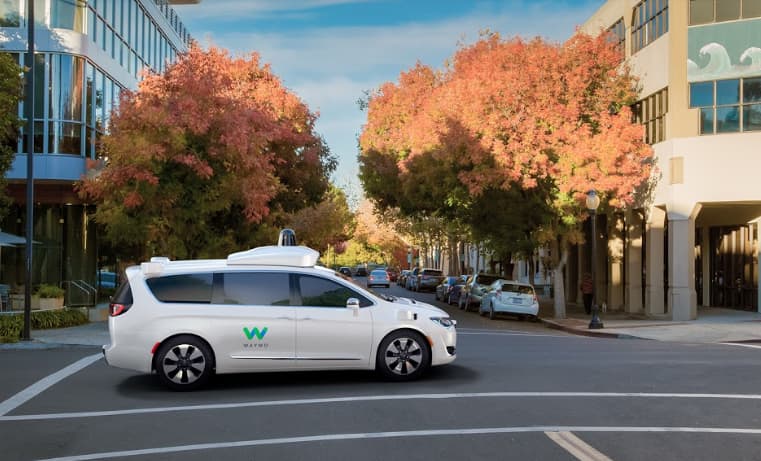
Chrysler Pacifica hybrid minivan that's party of Waymo's fleet

Waymo

General Motors and Alphabet's Waymo are among the companies encouraging federal safety regulators to swiftly, yet safely, update laws to better accommodate the testing and approval of fully autonomous vehicles on U.S. public roadways, even those without driver controls.

The companies, considered by many to be the leaders in autonomous vehicles, were among roughly 90 organizations and individuals to submit public comments on a proposed regulation on changing rules for self-driving vehicles to the National Highway Traffic Safety Administration and Federal Motor Carrier Safety Administration.

Lyft, Volvo, Intel and Mercedes-Benz, New York City and nonprofit consumer advocacy organizations like the Center for Auto Safety all weighed in on new safety standards for self-driving vehicles before the public comment period closed Wednesday.

Notably absent from the comments was Tesla, which has been very public about their aspirations for testing and deploying autonomous vehicles. Tesla did not immediately respond for comment.

The comments will be taken into consideration as federal regulators rewrite the rules, NHTSA said in an emailed statement.

While many believe autonomous vehicles can save lives, some have been skeptical about allowing the vehicles on public roads — particularly following a fatal crash involving a self-driving Uber vehicle in March 2018 in Arizona.

Removing manual controls

Regulators are considering allowing vehicles without manual controls, including steering wheels and pedals, to operate on U.S. roadways. Current laws require such equipment, and companies have to request exemptions to launch such vehicles.

GM, which last year along with its Cruise autonomous vehicle subsidiary petitioned for such exemptions, and Lyft support creating separate requirements that meet the "intent" of the safety standards, not the physical equipment.

"GM/Cruise supports NHTSA establishing new definitions that apply only to ADS-DVs [autonomous vehicles] without manual controls," GM said. "It would allow NHTSA to clearly delineate, where necessary, the requirements that apply to ADS-DV versus those that apply to traditional vehicles."

Lyft, in its comments, agreed that a "separate vehicle classification" for autonomous vehicles with their own regulations would "remove regulatory barriers and modify [federal motor vehicle safety standards] that reference a human driver and/or assume some manual control element within the test procedure."

The Alliance of Automobile Manufacturers, which encompasses 12 automakers that represent about 70 percent of all car and light truck sales in the U.S., encouraged NHTSA to use "a parallel and phased approach" that focuses on vehicles with advanced driver-assist systems as well as autonomous vehicles with and without manual controls.

Safety concerns

While many companies supported changes, several safety advocates and consumer watchdog groups cautioned NHTSA on hastily changing regulations.

Consumer Reports, while acknowledging the potential long-term safety benefit of autonomous vehicles, encouraged NHTSA to focus resources on more near-term benefits.

"In short: for NHTSA to save lives and prevent injuries, there are more important subjects the agency should be focusing on than 'removing regulatory barriers,' especially given the robust pace of industry innovation in many areas today, " Consumer Reports said.

The Center for Auto Safety, a Washington-based consumer advocacy organization, said it remains "skeptical" about companies testing vehicles without manual controls, citing "there is no demonstrable evidence" that the vehicles "can safely operate on (and off) America's roads."

—CNBC's contributed to this report.

Let's block ads! (Why?)


https://www.cnbc.com/2019/08/30/gm-lyft-urge-regulators-to-remove-driver-controls-on-autonomous-cars.html

2019-08-30 11:54:48Z
CAIiEJfVQk78KciabBHNmXjlKU0qGQgEKhAIACoHCAow2Nb3CjDivdcCMJ_d7gU

Altria: JUUL Of Denial - Seeking Alpha

[unable to retrieve full-text content]

  1. Altria: JUUL Of Denial  Seeking Alpha
  2. Juul CEO says 'don't vape,' long-term effects are unknown  INSIDER
  3. Juul Labs announces ID verification system to curb underage e-cigarette use  CBS This Morning
  4. Mom of teen with vaping addiction warns parents about the dangers of e-cigarettes: ‘It’s stealth by design’  Yahoo Lifestyle
  5. FTC Investigates S.F. Based E-Cigarette Maker Juul Over Ads Targeting Teens  KPIX CBS SF Bay Area
  6. View full coverage on Google News

https://seekingalpha.com/article/4288858-altria-juul-denial

2019-08-30 10:53:00Z
52780367761273

Elon Musk visits Gigafactory 3 site, receives support from Shanghai Party secretary - Teslarati

Recent images from China revealed that Tesla CEO Elon Musk had a busy day following his appearance at the opening segments of the 2019 World Artificial Intelligence Conference in Shanghai. Following his free-wheeling AI debate with Alibaba founder Jack Ma, Musk visited the Gigafactory 3 site in the Lingang industrial area, before meeting with Shanghai Party Secretary Li Qiang for a conversation about Tesla’s initiatives in China. 

Elon Musk’s visit to the Gigafactory 3 site appears to have been a welcome change of pace for the upcoming facility’s workers, who appeared to appreciate the presence of the Tesla CEO. The details of Musk’s visit to the Shanghai-based electric car production facility have not been shared by local news outlets yet, but social media reports from Shanghai stated that the Tesla CEO was extremely happy about the progress of Gigafactory 3’s construction. 

After his visit to the Gigafactory 3 complex, Musk met with Li Qiang, the secretary of the Shanghai Municipal Party Committee. During their conversation, the government official highlighted that Tesla and Gigafactory 3 are welcome additions to Shanghai, as they will bring new products and innovations to the city. Li also mentioned that Shanghai wants to build a highland for AI development in the future. 

Musk, for his part, proved equally optimistic and thankful for China’s support of Tesla. While speaking at the 2019 WAIC, Musk remarked that he is simply stunned about the quickness and efficiency of Gigafactory 3’s buildout. “Tesla’s China team has done an amazing job and I’m astounded that so much progress has been made for the Shanghai Gigafactory. It’s a good story for the world to see how much progress you can make in China. I really think China’s future looks very impressive,” he said. 

Following his busy Thursday, Musk appeared to have flown to China’s capital on Friday, as evidenced by pictures depicting the Tesla CEO having lunch at a famous Baozi (filled bun) restaurant in Beijing. Interestingly, the restaurant is very close to the Beijing office of the National Development and Reform Commission (发改委), which handles the country’s comprehensive economic projects, among others. 

Apart from Elon Musk’s appearance at the 2019 World AI Conference and his visit to the Gigafactory 3 complex, the Tesla CEO is also expected to launch The Boring Company’s China unit on this particular China trip. More details about this initiative will likely be shared from local news agencies, or in social media platforms, in the coming days. 

Elon Musk visits Gigafactory 3 site, receives support from Shanghai Party secretary

Let's block ads! (Why?)


https://www.teslarati.com/tesla-elon-musk-gigafactory-3-visit-meeting-party-secretary/

2019-08-30 10:00:23Z
52780368206885

ECB hawks are trying to downplay the chances of a huge stimulus package in September - CNBC

FMario Draghi (C), president of the European Central Bank (ECB)speaks flanked by Luis de Guindos, vice president of the European Central Bank (ECB), and Christine Graeff, director general for communications to the media following a meeting of the ECB Governing Council at ECB headquarters of March 7, 2019 in Frankfurt, Germany.

Thomas Lohnes | Getty Images

Two top officials have tried to temper market expectations of an immediate quantitative easing (QE) package being launched by the European Central Bank (ECB).

Earlier in the summer, ECB President Mario Draghi said he was looking at further options to prop up the 19-member euro zone economy, outlining that one of the possibilities included a new program of asset purchases to stimulate lending and boost inflation.

Investors cheered his dovish comments with ECB members like François Villeroy de Galhau highlighting that a major bond-buying program, also known as QE, could come in the proceeding months if needed.

But just as investors gear up for the ECB's next meeting on September 12, two notably hawkish members of the euro zone's central bank have decided to inject some reality back into the debate.

"In my opinion, based on the current data, it is much too early for a huge package," executive board member Sabine Lautenschlaeger said in an interview with Market News this week which was published on the ECB's website Friday.

"I am still convinced that the Asset Purchase Programme (APP) is the ultima ratio, and it should only be used if you have a risk of deflation; and the risk of deflation is nowhere to be seen now."

Fellow ECB member and Dutch central bank chief Klaas Knot added his own words of caution. "If deflation risks come back on the agenda then I think the asset-purchase programme is the appropriate instrument to be activated, but there is no need for it in my reading of the inflation outlook right now," he told Bloomberg Thursday.

But there's only been a muted market response since these comments with European stocks posting gains on both Thursday and Friday. Analysts at Rabobank put this down to traders already being aware that there wasn't unanimity among the ECB's board members on QE.

They also highlighted in a research note that the reason the hawks "are stating their objections so vociferously is that they know that it is very likely that the APP will imminently be re-started."

If implemented, it would be the second time in its history that the central bank has announced a massive program to directly inject money into the euro zone economy.

Last week, Erik Nielsen, group chief economist at UniCredit, predicted QE would be launched in September and could between 300 billion and 400 billion euros ($333.07 and $444.10 billion) over a nine-month period.

The euro area is still struggling to deal with its low inflation levels and to grow at a significant rate. According to the central bank's latest forecasts, out in June, headline inflation is set to reach 1.3% in 2019 — the ECB's target is "below but close to 2%." In terms of growth, the central bank is expecting growth to reach 1.2% this year — having grown at a rate of 1.8% in 2018.

Silvia Dall'Angelo, senior economist at Hermes Investment Management, told CNBC via email last week that he wouldn't rule out an open-ended approach by the ECB.

"An ECB official recently made the case for a more forceful move, a bigger rather than smaller programme is likely, say 45 billion euros per month for a year," he said.

Let's block ads! (Why?)


https://www.cnbc.com/2019/08/30/european-central-bnak-hawks-try-to-downplay-the-chances-of-qe.html

2019-08-30 09:15:54Z
CAIiEO9CJ7Hx3LmlK1p0OWcr4T0qGQgEKhAIACoHCAow2Nb3CjDivdcCMJ_d7gU

Kamis, 29 Agustus 2019

Best Buy shares fall after second-quarter sales miss and looming tariffs on core products weigh on stock - CNBC

Best Buy shares fell 9% after its second-quarter revenue and same-store sales growth missed analysts' expectations and upcoming tariffs on the company's core products weigh on the stock.

Investors were pessimistic Thursday morning, focusing on both the sales miss and a narrower estimate for same-store sales, driven by disappointing sales in Canada. However, the company did report earnings that beat expectations by 9 cents and raised its earnings forecast for the fiscal year.

Best Buy's CEO Corie Barry also said several of its core products including televisions, smart watches, and headphones will be hit with a 15% tariff on Sept. 1. The announcement of a delay in tariffs on Chinese goods on some items will affect computing, mobile phones, and gaming consoles, which will see the 15% duty on Dec. 15.

But the company still said that although it has tried to factor the impact of tariffs into its guidance, there is still uncertainty ahead.

"There is a bit of art and a bit of science to estimating this and we don't exactly have a precedent for the quantity of moving pieces that we have in place right now," Corie said in a call with analysts. "There's a few things we are trying to take into account here," including exactly which goods are on the list, when they will be implemented, and what rates.

Here's how the company did, compared with what Wall Street was expecting, according to Refinitiv consensus estimates:

  • Adjusted earnings per share: $1.08, vs. 99 cents estimated
  • Revenue: $9.54 billion, vs. $9.56 billion estimated
  • Same-store sales: up 1.6%, vs. 2.1% increase estimated

"For the second quarter, we are reporting comparable sales growth of 1.6% on top of a very strong 6.2% last year," said Barry. "We also delivered improved profitability driven by gross profit rate expansion and continued disciplined expense management, demonstrating the culture we have built around driving cost reductions and efficiencies to help fund investments."

Sales at Best Buy stores open for at least 12 months grew 1.6%, lower than analyst expectations of a 2.1% increase.

In the quarter ended Aug. 3, Best Buy reported net income of $238 million, or 89 cents a share, compared with $244 million, or 86 cents a share, a year earlier. Excluding restructuring costs and other one-time items, Best Buy earned $1.08 a share, topping analysts' estimates from Refinitiv.

Revenue rose to $9.54 billion from $9.38 billion a year ago, but was slightly below estimates of $9.56 billion.

Best Buy raised its earnings forecast for the fiscal year to a range of $5.60 to $5.75 per share from a previous estimate of between $5.45 to $5.60 per share. Both numbers are after excluding one-time items.

However, sales at stores open at least a year are expected to rise 0.7% to 1.7% this year. Previously, it estimated 0.5% to 2.5% same-store sales growth. Analysts were anticipating a 2% increase.

Domestic same-store sales grew 1.9% and revenue increased 2.1% to $8.82 billion. The company saw a domestic online revenue rise 17.3% to $1.42 billion because of higher average order values and increased traffic. Its domestic online revenue represented 16.1% of sales compared with 14% last year.

Internationally, same-store sales fell 1.9%, while revenue dropped 3.4% to $715 million. The company said the decline was driven primarily by sales in Canada.

Best Buy said repurchased $230 million in stock during the quarter. Prior to Thursday's selloff, Best Buy shares were up 30% since the start of the year, bringing its market cap to about $18.4 billion.

"I think that the challenges with Best Buy are many of the same challenges that are overall facing the retail industry. There are certainly the issues related to tariffs, but you can't overlook all of the other challenges the company has as well," said Sucharita Kodali, an analyst at Forrester on CNBC's "Squawk Box " Thursday.

She said one of the pressures the company is facing is commodification of their core products, including electronics.

"When you see the strength in numbers from retailers like Walmart and Target, their consumer electronic sections are bolstering that and that is absolutely going to naturally adversely affect Best Buy. You have the continued growth of Amazon, where electronics are a significant part of what consumers buy on that site. "

The company also said its same-store sales growth was fueled by strength in appliances and headphones, while gaming and home theater sales declined.

"What Best Buy has leaned into and what their strength was in this quarter was in categories like appliances, which are not well-suited to the e-commerce landscape, you have services, you have accessories which are high-margin things like headphones so those are definitely things that have helped and supported Best Buy," said Kodali.

"But the question is how much more can they lean into things like services and installations, and is there more headroom there? I would argue that those are sectors that can be somewhat challenged," she said.

Let's block ads! (Why?)


https://www.cnbc.com/2019/08/29/best-buy-reports-fiscal-q2-2019-earnings.html

2019-08-29 12:20:41Z
CAIiEMkUE23w14HUgKEf28QTG0gqGQgEKhAIACoHCAow2Nb3CjDivdcCMJ_d7gU

Best Buy shares fall after second-quarter sales miss and looming tariffs on core products weigh on stock - CNBC

Best Buy shares fell 6.5% after its second-quarter revenue and same-store sales growth missed analysts' expectations and upcoming tariffs on the company's core products weigh on the stock. 

Investors were pessimistic Thursday morning, focusing on both the sales miss and a narrower estimate for same-store sales, driven by disappointing sales in Canada. However, the company did report earnings that beat expectations by 9 cents and raised its earnings forecast for the fiscal year.

Here's how the company did, compared with what Wall Street was expecting, according to Refinitiv consensus estimates:

  • Adjusted earnings per share: $1.08, vs. 99 cents estimated
  • Revenue: $9.54 billion, vs. $9.56 billion estimated
  • Same-store sales: up 1.6%, vs. 2.1% increase estimated

"For the second quarter, we are reporting comparable sales growth of 1.6% on top of a very strong 6.2% last year," said Barry. "We also delivered improved profitability driven by gross profit rate expansion and continued disciplined expense management, demonstrating the culture we have built around driving cost reductions and efficiencies to help fund investments."

Sales at Best Buy stores open for at least 12 months grew 1.6%, lower than analyst expectations of a 2.1% increase.

In the quarter ended Aug. 3, Best Buy reported net income of $238 million, or 89 cents a share, compared with $244 million, or 86 cents a share, a year earlier. Excluding restructuring costs and other one-time items, Best Buy earned $1.08 a share, topping analysts' estimates from Refinitiv.

Revenue rose to $9.54 billion from $9.38 billion a year ago, but was slightly below estimates of $9.56 billion.

Best Buy raised its earnings forecast for the fiscal year to a range of $5.60 to $5.75 per share from a previous estimate of between $5.45 to $5.60 per share. Both numbers are after excluding one-time items.

However, sales at stores open at least a year are expected to rise 0.7% to 1.7% this year. Previously, it estimated 0.5% to 2.5% same-store sales growth. Analysts were anticipating a 2% increase.

Domestic same-store sales grew 1.9% and revenue increased 2.1% to $8.82 billion. The company saw a domestic online revenue rise 17.3% to $1.42 billion because of higher average order values and increased traffic. Its domestic online revenue represented 16.1% of sales compared with 14% last year.

Internationally, same-store sales fell 1.9%, while revenue dropped 3.4% to $715 million. The company said the decline was driven primarily by sales in Canada.

Best Buy said repurchased $230 million in stock during the quarter. Prior to Thursday's selloff, Best Buy shares were up 30% since the start of the year, bringing its market cap to about $18.4 billion.

"I think that the challenges with Best Buy are many of the same challenges that are overall facing the retail industry. There are certainly the issues related to tariffs, but you can't overlook all of the other challenges the company has as well," said Sucharita Kodali, an analyst at Forrester on CNBC's "Squawk Box " Thursday.

She said one of the pressures the company is facing is commodification of their core products, including electronics.

"When you see the strength in numbers from retailers like Walmart and Target, their consumer electronic sections are bolstering that and that is absolutely going to naturally adversely affect Best Buy. You have the continued growth of Amazon, where electronics are a significant part of what consumers buy on that site. "

The company also said its same-store sales growth was fueled by strength in appliances and headphones, while gaming and home theater sales declined.

"What Best Buy has leaned into and what their strength was in this quarter was in categories like appliances, which are not well-suited to the e-commerce landscape, you have services, you have accessories which are high-margin things like headphones so those are definitely things that have helped and supported Best Buy," said Kodali.

"But the question is how much more can they lean into things like services and installations, and is there more headroom there? I would argue that those are sectors that can be somewhat challenged," she said. 

Let's block ads! (Why?)


https://www.cnbc.com/2019/08/29/best-buy-reports-fiscal-q2-2019-earnings.html

2019-08-29 12:20:32Z
CAIiEMkUE23w14HUgKEf28QTG0gqGQgEKhAIACoHCAow2Nb3CjDivdcCMJ_5ngY

Best Buy misses quarterly same-store sales estimates - CNA

Best Buy Co Inc reported a smaller-than-expected rise in quarterly same-store sales on Thursday, as the biggest U.S. consumer electronics retailer sold fewer video game consoles and other entertainment products.

People wait in line to shop at Best Buy on during a sales event on Thanksgiving day in Westbury, Ne
FILE PHOTO: People wait in line to shop at Best Buy during a sales event on Thanksgiving day in Westbury, New York, U.S., November 22, 2018. REUTERS/Shannon Stapleton

REUTERS: Best Buy Co Inc reported a smaller-than-expected rise in quarterly same-store sales on Thursday, as the biggest U.S. consumer electronics retailer sold fewer video game consoles and other entertainment products.

Best Buy's overall same-store sales 1.6per cent in the second quarter ended Aug. 3. Analysts on average had expected a 2.15per cent increase, according to IBES data from Refinitiv.

Revenue rose to US$9.54 billion from US$9.38 billion, a touch below expectations of US$9.56 billion.

The company also narrowed its full year sales forecast to a range of US$43.1 billion to US$43.6 billion, from a US$42.9 billion to US$43.9 billion range, citing planned further increases in U.S. tariffs on Chinese goods.

(Reporting by Uday Sampath in Bengaluru; Editing by Tomasz Janowski)

Let's block ads! (Why?)


https://www.channelnewsasia.com/news/business/best-buy-misses-quarterly-same-store-sales-estimates-11854562

2019-08-29 11:24:38Z
52780367468497

Jack Ma, once proponent of 12-hour work days, now foresees 12-hour workweeks - The Washington Post

Aly Song Reuters Alibaba executive chairman Jack Ma, left, with Tesla chief executive officer Elon Musk in Shanghai on Thursday.

BEIJING — Jack Ma, the Chinese tech billionaire known for arguing in favor of a 12-hour work day, sees a future in which people will have to work only 12 hours a week.

The founder of e-commerce behemoth Alibaba said Thursday that technological advancements would enable people to live longer and work far fewer hours.

“Every technology revolution, people start to worry. In the last 200 years we have worried [that] new technology is going to take away all the jobs,” he said in a discussion in Shanghai on Thursday with Elon Musk, Tesla’s billionaire founder. Tesla is building an electric-vehicle factory in the city, and the two were on the stage at the World Artificial Intelligence Conference there. 

Ma has previously courted controversy with his endorsement of the “996” work practices prevalent in China’s tech industry, under which employees are expected to work 9 a.m. to 9 p.m., six days a week.

In remarks earlier this year, Ma said that the opportunity to work such hours was a “blessing” and that without this kind of working culture, China’s economy was “very likely to lose vitality and impetus.”

Another tech titan went further, declaring that the 996 culture was for slackers. Richard Liu, chief executive of rival e-commerce company JD.com, said he works “8116+8” — or 8 a.m. to 11 p.m. Monday to Saturday, then a mere eight hours on Sunday.

But speaking with Musk on Thursday, Ma said that in the future, people would be able to enjoy a much shorter workweek.

 “In the next 20 to 30 years, human beings will live much longer. Life science technology is going to make people live probably 100 or 120 years,” he said. “That may not be a good thing because you get your grandfather’s grandfather still working hard.”

But it didn’t matter, he said, as the world wouldn't need a lot of jobs.

 “I think people should work three days a week, four hours a day,” he said, citing previous technological leaps like the Industrial Revolution and the use of electricity as improving work-life balance. 

“The power of electricity is that we make people more time, so you can go to the karaoke in the evening, you can go to dancing parties in the evening,” he said in English.

“I think that because of artificial intelligence, people will have more time to enjoy being human beings. I don’t think we’ll need a lot of jobs,” Ma told Musk. “The jobs we need are [ones to] make people happier. People experience life, enjoy [being] human beings.”

[ In a workaholic China, the stressed-out find a refuge with monks and Sanskrit ]

China’s netizens were unimpressed.

“Ma has said previously that 996 was a blessing. How can he say now that people can work three days a week, four hours a day, and go to karaoke or dance parties in the evening,” asked one person using the nickname “Be a friend with time daily” on Weibo, the Chinese version of Twitter.

“Previously he talked in Chinese about 996. That’s for us. This time, he said ‘three days a week, four hours a day’ in English. That’s for foreigners.”

Another, using the name “Soda water,” used a Chinese saying that means two things don’t fit together: “Musk will find that this dialogue is like putting a donkey’s lips on a horse’s mouth.”

Liu Yang contributed to this article.

Read more

A year into the trade war, China learns to ride out Trump’s turbulence

Trump retaliates in trade war by demanding companies cut ties with China

Today’s coverage from Post correspondents around the world

Like Washington Post World on Facebook and stay updated on foreign news

Let's block ads! (Why?)


https://www.washingtonpost.com/world/asia_pacific/jack-ma-proponent-of-12-hour-work-days-foresees-12-hour-workweeks/2019/08/29/fd081370-ca2a-11e9-9615-8f1a32962e04_story.html

2019-08-29 09:26:31Z
52780367324828

US futures turn higher after 'calm' trade comments from China - CNBC

U.S. stock index futures turned positive Thursday morning, after China said it wished to resolve its protracted trade dispute with the world's largest economy with a "calm" attitude.

At around 04:00 a.m. ET, Dow futures rose 184 points, indicating a positive open of more than 197 points. Futures on the S&P and Nasdaq were both slightly higher, reversing earlier losses.

When asked about its ongoing trade war with the U.S., China's commerce ministry reportedly said Thursday that it was opposed to escalating trade tensions.

The comments appeared to soothe investor concerns at a time when many are worried about the possibility of a global recession.

On Wednesday, the rate on the benchmark 30-year Treasury bond sank to an all-time low, while the U.S. yield curve inverted even further.

The closely-watched spread between the 10-year Treasury yield and the 2-year rate briefly fell to negative 6 basis points in the previous session. The move extended losses from earlier in the week, when the spread registered its lowest level since 2007.

A 10-year rate below the 2-year yield is viewed by fixed income traders as an important recession prognosticator, marking an unusual phenomenon as bondholders receive better compensation in the short term.

U.S. bond yields hovered marginally above record lows on Thursday morning.

Data, earnings

On the data front, the latest weekly jobless claims, a second reading of second-quarter GDP (gross domestic product) and advance economic indicators for July are all scheduled to be released at 8:30 a.m.

Pending home sales for July will follow slightly later in the session.

In corporate news, Toronto-Dominion Bank, Best Buy and Dollar General are among some of the companies expected to report earnings before the opening bell.

Dell, Marvell Tech and Workday are scheduled to release their latest quarterly results after market close.

Let's block ads! (Why?)


https://www.cnbc.com/2019/08/29/stock-market-wall-street-in-focus-amid-recession-fears.html

2019-08-29 06:33:12Z
52780366603007

Marriott eliminating tiny toiletries, shampoo bottles by 2020 to reduce waste - WABC-TV

It could be lights out for tiny toiletries.

Marriott International, the world's largest hotel chain, said Wednesday it will eliminate small plastic bottles of shampoo, conditioner and bath gel from its hotel rooms worldwide by December 2020. They'll be replaced with larger bottles or wall-mounted dispensers, depending on the hotel.


The move follows a similar announcement last month by IHG, which owns Holiday Inn, Kimpton and other brands. IHG said it will eliminate about 200 million tiny bottles each year by 2021. Last year, Walt Disney Co. said it would replace small plastic shampoo bottles at its resorts and on its cruise ships. Many smaller companies, like the five Soneva Resorts in Thailand and the Maldives, have also ditched plastic bottles.

Marriott has more than 7,000 hotels in 131 countries under 30 brands, ranging from SpringHill Suites and Residence Inn to Sheraton and Ritz-Carlton. It says it will be eliminating about 500 million small bottles each year, or 1.7 million pounds of plastic.

Marriott has wanted to get rid of small bottles for years, President and CEO Arne Sorenson said. There are just too many of them, he said, and they're difficult to recycle because of the time it takes to clean them out.

But it took a lot of work to design tamper-resistant large bottles and get suppliers on board. High-end hotels, in particular, needed to have bottles that still felt luxurious, he said.

"There were a lot of technical features to this that we had to get right," he said.

Rival Hyatt Hotels Corp. is going through a similar process now. The company says it's been testing amenity dispensers in some rooms for the last year.


Bethesda, Maryland-based Marriott started replacing small bottles early last year at some North American brands, including Courtyard and Fairfield hotels. About 1,000 of those now feature larger bottles or pump dispensers that are hooked to the shower wall.

Denise Naguib, Marriott's vice president of sustainability and supplier diversity, said Marriott got a positive response from guest surveys. Many were relieved because the larger bottles let them use as much or as little shampoo as they want.

"More and more people have a general consciousness of it," she said. "They don't want to be leaving half-empty bottles."

Naguib said most Marriott hotels will eliminate small bottles by July 1, 2020. Luxury brands will get rid of them by the end of 2020. Lower-priced brands will have dispensers or bottles that are tethered to the shower wall. Luxury brands will have untethered bottles. The bottles hold the equivalent of 10 to 12 small bottles, and all are tamper resistant.

The larger bottles will still be plastic, and Marriott still plans to replace them - not just refill them - when they run low. But Naguib said the larger bottles are easier to recycle than smaller ones.


Environmental groups are applauding the moves.

"Plastic pollution is an urgent global crisis and the time is now to think 'reusable' instead of 'disposable,'" said Dianna Cohen, co-founder and CEO of the Berkeley, California-based Plastic Pollution Coalition.

Soon, hotels may not have a choice. Lawmakers in California are considering banning hotels from using small shampoo bottles in 2023, while the European Union is banning a wide range of single-use plastic items, like cutlery and plates, by 2021.

Sorenson said he expects some complaints, like Marriott heard last year when it banned plastic straws and stirrers. Many people like collecting hotel shampoo bottles, he said. His own mother used to have a drawer full of soap she took from hotels.

"Human nature is what it is and we resist change," he said. "But people understand that this is so much better."

Copyright © 2019 by The Associated Press. All Rights Reserved.

Let's block ads! (Why?)


https://abc7ny.com/travel/marriott-eliminating-tiny-toiletries-by-2020/5498043/

2019-08-29 04:01:57Z
CBMiT2h0dHBzOi8vYWJjN255LmNvbS90cmF2ZWwvbWFycmlvdHQtZWxpbWluYXRpbmctdGlueS10b2lsZXRyaWVzLWJ5LTIwMjAvNTQ5ODA0My_SAVNodHRwczovL2FiYzdueS5jb20vYW1wL3RyYXZlbC9tYXJyaW90dC1lbGltaW5hdGluZy10aW55LXRvaWxldHJpZXMtYnktMjAyMC81NDk4MDQzLw

Rabu, 28 Agustus 2019

Daily Crunch: Peloton finances revealed - TechCrunch

The Daily Crunch is TechCrunch’s roundup of our biggest and most important stories. If you’d like to get this delivered to your inbox every day at around 9am Pacific, you can subscribe here.

1. Peloton files publicly for IPO

Peloton previously filed a confidential S-1, but now its IPO documents have been revealed publicly, showing that the fitness tech company brought in $915 million in revenue during its most recent fiscal year, with losses of $245.7 million.

Co-founder and CEO John Foley laid out a grand vision in the documents, writing that “Peloton is so much more than a Bike — we believe we have the opportunity to create one of the most innovative global technology platforms of our time.”

2. Anthony Levandowski, former Google engineer at center of Waymo-Uber case, charged with stealing trade secrets

If convicted, Levandowski faces a maximum sentence of 10 years and a fine of $250,000 — plus restitution — for each violation, according to the U.S. Attorney’s office.

3. Fitbit’s CEO discusses the company’s subscription future

At a small event in Manhattan this week, Fitbit laid out its future for the press. Tellingly, the event was far more focused on the company’s software play. (Extra Crunch membership required.)

Image via Getty Images /
franckreporter

4. US border officials are increasingly denying entry to travelers over others’ social media

The latest case saw a Palestinian national living in Lebanon and would-be Harvard freshman denied entry to the U.S. just before the start of the school year.

5. ThoughtSpot hauls in $248M Series E on $1.95B valuation

ThoughtSpot was started by a bunch of ex-Googlers looking to bring the power of search to data. Seven years later the company is growing fast, sporting a valuation of almost $2 billion and looking ahead to a possible IPO.

6. Google will shut down Google Hire in 2020

Google built Hire in an effort to simplify the hiring process, with a workflow that integrated into Google’s G Suite things like searching for applicants, scheduling interviews and providing feedback about potential hires.

7. Rwanda to phase out gas motorcycle taxis for e-motos

The government of Rwanda will soon issue national policy guidelines to eliminate gas motorcycles in its taxi sector in favor of e-motos.

Let's block ads! (Why?)


https://techcrunch.com/2019/08/28/daily-crunch-peloton-finances-revealed/

2019-08-28 18:09:52Z
CAIiEIdIGIENoe8dC7V1a699MBoqFAgEKg0IACoGCAowlIEBMLEXMOc_

Peloton's IPO shows the company is serving the wealthy, but not making us healthy - CNBC

John Foley, CEO of Peloton.

Adam Jeffery | CNBC

Peloton, the company that brings spin classes to your living room, has turned the combination of fitness and connected gadgets into a business that's big enough for the public markets.

In its IPO prospectus released on Tuesday, the maker of home stationary bikes and treadmills attributed its growth — more than 100% in the past year — to the "growing awareness of the benefits of exercise and physical activity." The company said that over the past two decades, even in times of recession, the fitness industry has grown in the U.S. and abroad.

But Peloton suffers from the same deficiency that plagues other digital health products and services like activity trackers, personal training apps and fitness classes. It's not actually moving the needle when it comes to the country's health.

More than 1 in 3 Americans are considered obese, which adds up to at least $147 billion in costs a year to the overburdened health-care system. Type 2 diabetes is on the rise, and about 610,000 people die of heart disease every year in the U.S., according to the Centers for Disease Control and Prevention. There's a tight relationship between income level and risk of cardiovascular disease.

The Peloton bike costs more than $2,200 for the most basic package, and that doesn't include the monthly fees for classes. That's far out of reach for millions of Americans, who are living paycheck to paycheck. For the company to have a real impact on the health crisis it would need to reach not just urbanites who love the convenience, but also the parts of the population most in need of easy-to-use fitness services.

Peloton isn't trying to fool anyone about its target market. The company was mocked earlier in the year in a viral tweet thread that poked fun at its ads, which are clearly aimed at the wealthy.

Robin Arzón, vice president of fitness programming at Peloton

Photo courtesy Peloton

"These models are expensive and are excluding a lot of people," said Iyah Romm, CEO of Cityblock Health, an urban health initiative that focuses on low-income communities. "And there's the question of whether it's even relatable to diverse populations."

Peloton has more than 500,000 customers using its paid subscription service, up from just over 245,00 a year ago. Revenue climbed to $915 million in the 12 months that ended June 30, up from $435 million the prior year.

"We believe that busy lifestyles, less free time and changing household dynamics are driving demand," Peloton said in the filing.

People with low incomes also fit those categories, but they simply can't afford the services. And Peloton, which is already losing money, has to put even more emphasis on profit margins as it looks at attract public market investors.

"We've inadvertently designed a society where it's hard to be healthy," said Steve Downe, chief technology and strategy officer for the Robert Wood Johnson Foundation. "So many of the solutions aren't available to most people."

WATCH: Peloton files for IPO under ticker PTON

Let's block ads! (Why?)


https://www.cnbc.com/2019/08/28/peloton-ipo-shows-company-serving-wealthy-not-making-us-healthy.html

2019-08-28 12:25:12Z
52780365842179

Senin, 26 Agustus 2019

Dow rallies on trade optimism - CNN

The Dow (INDU) traded more than 170 points, or 0.7%, higher around midday, having come off of its earlier highs. The S&P 500 (SPX) and the Nasdaq Composite (COMP) traded 0.7% and 0.9% higher, respectively.
All three stock indexes ended Friday in the red, logging their fourth down-week in a row.
China's Vice Premier Liu He said Monday that an escalation of the trade war would be bad for all parties and "the interest of the people in the world," while Trump said at the G7 summit in France "I think we're going to make a deal."
During a press conference at the summit Monday, Trump added that the United States will only make a trade deal with China if it is "fair" and "good".
He said a meeting with Iran in the near term is also possible.
That also helped some of the European bourses higher, and the German Dax (DAX) and the French CAC 40 (CAC40) moved up. UK markets are closed for the summer bank holiday.
The trade spat between the world's two largest economies escalated Friday, when China announced new tariffs on $75 billion worth of US imports. Trump tweeted his frustration in response to the tariffs and sent the stock market lower. After Friday's closing bell, Washington announced a new round of tariffs on Chinese imports starting October 1.
Those $250 billion goods currently hit with a 25% levy, will be taxed at 30%, while the remaining $300 billion worth of imports will be hit with a 15% tariff instead of 10%.
Despite the trade war tensions, one economic indicator showed the US economy remains resilient: Durable goods orders for July climbed 2.1% on the month, much more than expected. Excluding transportation, the orders are up 0.4%.
But that was counterbalanced with the Chicago Fed National Activity Index, which slipped further in July. It was down 0.4% compared with a flat reading in June. A negative index number represents below-trend growth.
"We believe the Chicago Fed National Activity Index remains the best indicator to gauge US recession risks," wrote Win Thin, global head of currency strategy at Brown Brothers Harrison, in a note to investors.

Let's block ads! (Why?)


https://www.cnn.com/2019/08/26/investing/dow-stock-market-trade-today/index.html

2019-08-26 15:02:00Z
CAIiEP5GEPhkej3-TvVbZS9XUqUqGQgEKhAIACoHCAowocv1CjCSptoCMPrTpgU

China trade war: Liu He calls for calm after Trump comments - Axios

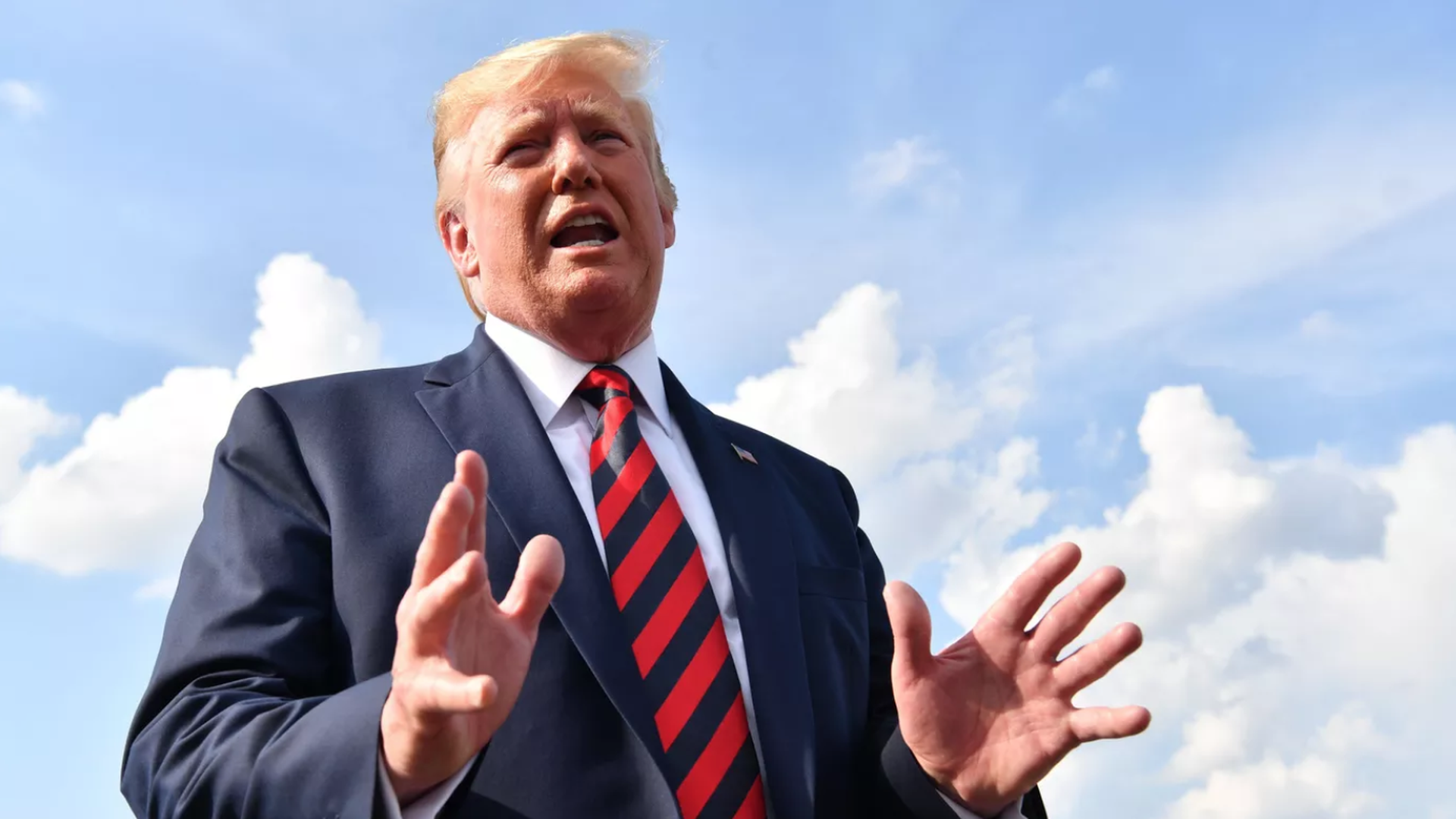
President Trump speaks with the media
Photo: Nicholas Kamm/AFP/Getty Images

President Trump said Monday China has contacted his administration to request for trade talks to resume.

Details: His comments came after China's economy czar, Vice Premier Liu He, said the Chinese government is willing to negotiate with the United States in a calm manner to resolve trade issues, Reuters reports.

QuoteWe are willing to resolve the issue through consultations and cooperation in a calm attitude and resolutely oppose the escalation of the trade war."
— Vice Premier Liu He comments, translated by Reuters

Driving the news: President Trump said Friday he would raise tariffs against China, hours after the Chinese government announced it would levy retaliatory duties on earlier U.S. action.

  • Trump ramped up tensions at the G7 summit in France on Sunday, telling reporters that he had "no plans right now" to follow through on his emergency declaration threat to force U.S. companies to leave China but added, "If I want, I could declare a national emergency."
  • And after telling reporters that he "might as well" have "second thoughts" about escalating the trade war, White House press secretary Stephanie Grisham clarified that Trump "regrets not raising the tariffs higher."

The big picture: China had vowed to continue fighting the trade war "until the end." But Reuters reports that Liu said at a tech conference in southwest Chongqing, "We believe that the escalation of the trade war is not beneficial for China, the United States, nor to the interests of the people of the world."

Editor's note: This article has been updated with new details throughout.

Go deeper:

Let's block ads! (Why?)


https://www.axios.com/china-trade-war-liu-he-calls-for-calm-resolution-after-trump-remarks-bc491d9d-0a4f-4be6-b478-a0c5934ee2a4.html

2019-08-26 05:43:00Z
CAIiEDlw40yoAuzKDZzaGyzTMhgqGQgEKhAIACoHCAowysWECzCkqIEDMI-qgwY

Sabtu, 24 Agustus 2019

More than 20,000 AT&T workers walking off the job overnight Friday. - Atlanta Journal Constitution

 In a surprise move, more than 20,000 union workers for AT&T in the Southeast went out on strike as of midnight Friday, officials said.

Members of the Communication Workers of America – including 4,000 in Georgia – charged the huge telecommunications company with unfair labor practices during negotiations aimed at securing a new contract.

The previous agreement expired Aug. 3.

Since then, the talks have gone nowhere because the company has made sure that an agreement cannot happen said Richard Honeycutt, the union’s vice president for the Southeast in a statement issued late Friday. “Our talks have stalled because it has become clear that AT&T has not sent negotiators who have the power to make decisions so we can move forward toward a new contract.”

The company, which is based in Dallas, has annual revenue of about $170 billion a year. It includes the remnants of Atlanta-based BellSouth, which for more than two decades was the largest of the seven regional phone companies.

Company officials said they were blindsided and mystified by the strike call.

“We’re baffled as to why union leadership would call one when we’re offering terms that would help our employees – some of whom average from $121,000 to $134,000 in total compensation – be even better off,” said AT&T spokesman Jim Kimberly.  

Company officials were adamant about being prepared for a walk-out. In the days before the contract expired, AT&T officials said they would be prepared for a strike and that business operations would go on smoothly with managers, executives and contractors picking up the slack.

“We’re prepared for a strike and in the event of a work stoppage, we will continue working hard to serve our customers,” Kimberly said on Friday night 

Union leaders scoffed at the notion, arguing that the company will have to prioritize work delaying new installations and non-emergency maintenance.

The union said it has filed an unfair labor practice charge with the National Labor Relations Board, arguing that the company has not bargained in good faith.

The union’s Southeast region includes technicians, customer service representatives and others who “install, maintain and support” the company’s landline and internet line services. The region includes Alabama, Florida, Georgia, Kentucky, Louisiana, Mississippi, North Carolina, South Carolina and Tennessee.

Union officials have said that the key issues are job security and a steady rise in healthcare costs. 

The timing of the strike gives the union leverage in some ways, but favors the huge company in others.

To the workers advantage is a tight labor market in which a low unemployment rate has many employers complaining of a shortage in skilled workers. 

But changes in technology allow the company's day-to-day operations to continue smoothly, which may encourage AT&T to try waiting out the strike.

And the federal agency that the union is making its complaints to, the NLRB, has become more conservative over the years even as the influence of unions nationally has shrunk.

Moreover, the South has long been a region with fewer union members and governments that are typically not sympathetic. 

That backdrop has made many southern unions reluctant to strike. But some telecom workers have said they are under continued pressure, that wages are rising more slowly than costs while the company shifts to lower-paid jobs and contract workers.

Support real journalism. Support local journalism. Subscribe to The Atlanta Journal-Constitution today. See offers.

Your subscription to the Atlanta Journal-Constitution funds in-depth reporting and investigations that keep you informed. Thank you for supporting real journalism.

Let's block ads! (Why?)


https://www.ajc.com/business/workers-strike-the-southeast-more-than-000-walk-out/wNwYJfXjLwOLuRg0148BuM/

2019-08-24 19:39:13Z
52780362417161

Jumat, 23 Agustus 2019

US futures point to higher open ahead of Powell's speech - CNBC

U.S. stock index futures were higher Friday morning, as market participants awaited a key speech from the Federal Reserve's top official.

At around 03:00 a.m. ET, Dow futures rose 108 points, indicating a positive open of more than 92 points. Futures on the S&P and Nasdaq were both slightly higher.

Market focus is largely attuned to the U.S. central bank's annual Jackson Hole symposium, with Fed Chairman Jerome Powell expected to address an audience of policymakers and economists at around 10:00 a.m. ET.

Powell faces the tough challenge of presenting a unified voice on Fed policy from the most divided U.S. central bank in years.

It comes as both the Fed and Powell are under an unprecedented siege from an angry president, while a speech that fails to assure investors the U.S. central bank will continue to cut interest rates could create even more market volatility.

As of Friday morning, Fed funds futures were pricing a likelihood of almost 90% for a 25 basis point rate cut at the September meeting, and between one or two further quarter-point rate cuts between then and the end of the year.

On the data front, new home sales for July will be released at around 10:00 a.m. ET.

In corporate news, Foot Locker, Buckle and Red Robin Gourmet Burgers are expected to report their latest quarterly results before the opening bell.

Let's block ads! (Why?)


https://www.cnbc.com/2019/08/23/us-stocks-wall-street-monitors-speech-from-fed-chair-jerome-powell.html

2019-08-23 07:00:36Z
52780358880458

Kamis, 22 Agustus 2019

Fed's Powell, under pressure, likely to stick to 'mid-cycle' message - Reuters

JACKSON HOLE, Wyo. (Reuters) - Federal Reserve Chair Jerome Powell comes to this year’s meeting of central bankers in Jackson Hole, Wyoming, caught between discord within the U.S. central bank over appropriate monetary policy and mounting outside pressure for more interest rate cuts.

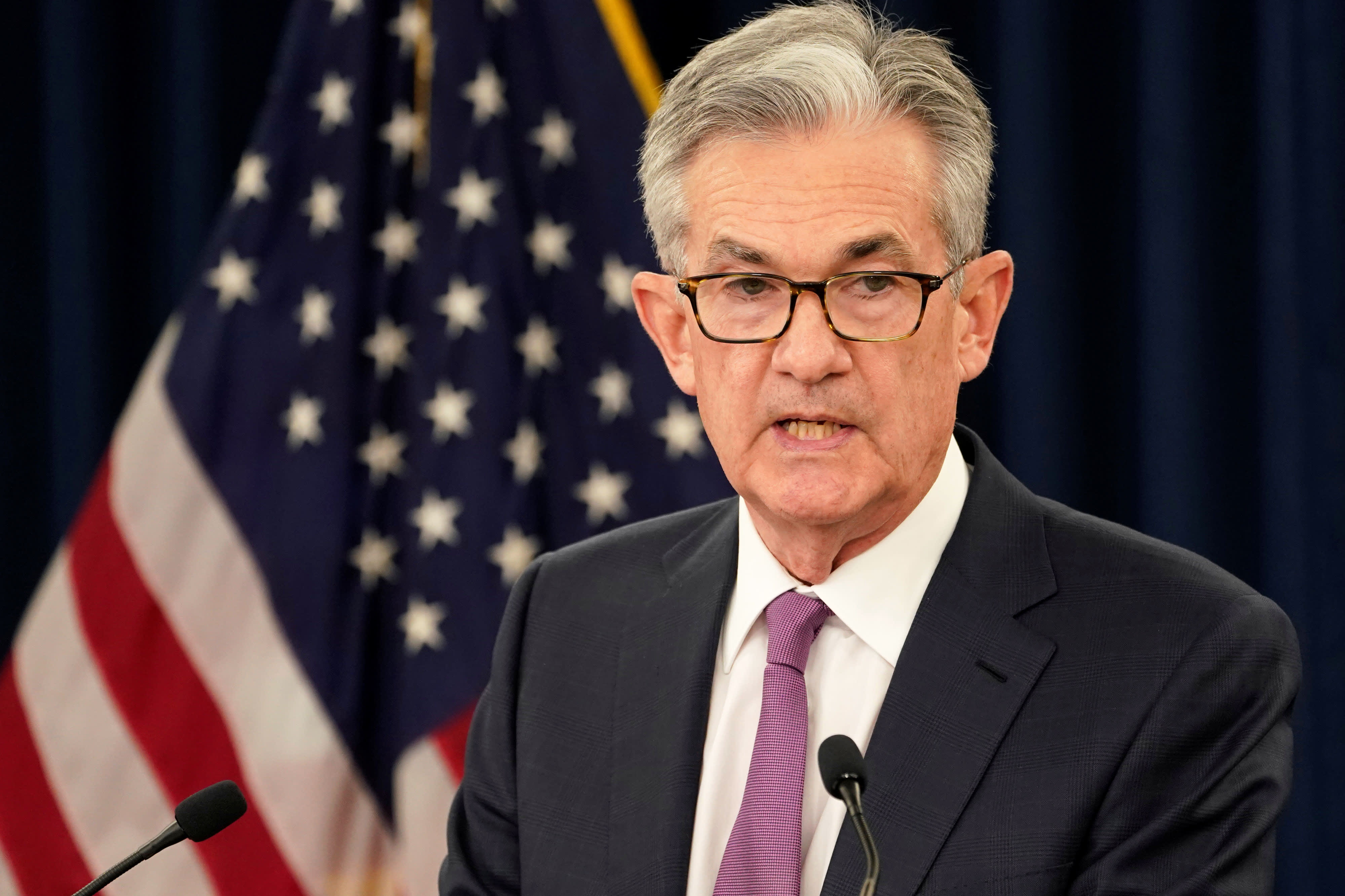
FILE PHOTO: U.S. President Donald Trump looks on as Jerome Powell, his nominee to become chairman of the U.S. Federal Reserve, speaks at the White House in Washington, U.S., November 2, 2017. REUTERS/Carlos Barria

In navigating that divide, Powell is unlikely to use his keynote speech on Friday at the Kansas City Fed’s annual economic symposium to veer much from the message he sent last month after the Fed cut rates for the first time in a decade: That the move was a “mid-cycle adjustment” and not the start of a rate-cutting cycle.

He will likely nod to the possibility that trade tensions, which have escalated since the July 30-31 policy meeting, may worsen a global economic slowdown and ultimately make more U.S. rate cuts necessary.

But he is expected also to try to ensure he is not seen as bowing before repeated attacks from President Donald Trump for not easing policy further, or caving to a bond market where investors appear to be heavily betting the policy-setting Federal Open Market Committee will end up doing so.

“We cannot rule out this year’s Jackson Hole being another fundamental shift in policy as it has been in years past,” UBS economists wrote in a note earlier this week. “But more likely, Powell will give another speech on risk management to try to lean dovish without committing to bold actions that the committee may not ratify.”

Since last August’s annual central bank gathering in Grand Teton National Park, Powell has faced an increasingly difficult terrain both politically and economically.

Trump has steadily ratcheted up his criticism of the Fed and Powell, who was handpicked by the president in late 2017 to head the central bank.

Last week, Trump called Powell “clueless” and urged the Fed to reduce borrowing costs by a full percentage point to boost the economy, which is feeling the drag from the U.S.-China trade war.

Some Fed policymakers point to low U.S. unemployment, which is near a half-century low, strong consumer spending and other bullish data as reason to hold the line on any further interest rate moves.

But the economy has slowed as the stimulus from Trump’s tax cuts and increased government spending have faded, and business sentiment and spending have declined amid mounting uncertainty over the outcome of the White House’s trade policies.

As trade wars and other economic developments have slowed growth in countries from Germany to Turkey to Australia, central banks have responded by cutting interest rates, setting up an international trend the Fed may find it hard to buck.

Powell’s colleagues inside the Fed are nowhere near a broad consensus on how to proceed. The Fed chief mustered a majority among the current voting policymakers to back last month’s rate cut, but the minutes of the meeting released on Wednesday showed a wider gulf inside the broader committee than was reflected in the decision.

Caught between these moving levers, Powell may opt to stand still.

“(Powell) does not want to surprise with a 100-basis-point cut ... (he wants to) telegraph it methodically and achieve the easing in a way that everybody around the world can see and anticipate and prepare for,” said Julia Coronado, who runs the consulting firm MacroPolicy Perspectives and follows the Fed closely.

FEEDBACK LOOPS

Powell faces other complications that have emerged since last year’s Jackson Hole conference.

On trade, his conundrum is this: If he cuts rates to offset risks from uncertainties over Trump’s policies, the president may simply go harder at China, creating more uncertainty in markets and among businesses and making further rate cuts necessary.

After the rate cut last month, Trump vowed to impose tariffs on an additional $300 billion in Chinese imports on Sept. 1, though he later deferred some of the levies to December.

One index tracking world trade uncertainty has spiked recently, driving up overall global uncertainty that in the past has set the stage for downturns. (For a graphic, please see here)

“If the Fed cuts rates as Trump demands, that will ease pressure on the stock market, which Trump may take as giving him a stronger hand in his trade spat with China,” said Nicholas Bloom, an economics professor at Stanford University and one of the authors of the policy uncertainty index.

“Central banks can’t really provide insurance against potential trade wars.”

Markets are also creating a difficult-to-navigate feedback loop. A yield curve inversion last week that reversed itself and then returned on Thursday underscores investors’ fears that a recession may be around the corner, and while some Fed policymakers have cautioned against taking too much of a signal from falling long-term borrowing rates, others say they can’t be ignored.

FILE PHOTO: Federal Reserve Chair Jerome Powell and New York Federal Reserve President John Williams walk together, ahead of the Kansas City Federal Reserve Bank’s annual conference on monetary policy, in Jackson Hole, Wyoming, U.S., August 22, 2019. REUTERS/Ann Saphir

The feedback loop between the Fed and bond markets “might not be broken until the economic data signal very decisively that further easing is inappropriate,” Goldman Sachs economist Jan Hatzius wrote this week.

Last year at Jackson Hole, Powell tried to fundamentally reset U.S. monetary policy expectations toward a data-centric practice and away from theory-based models. This year, though, the challenge is that the data itself is giving mixed signals.

“Part of the problem is that the Fed has raised transparency and guidance to such a level that when they are in a situation where things are really, literally, uncertain and it is hard to give that guidance, the markets don’t know what to do,” said Maurice Obstfeld, an economics professor at the University of California, Berkeley. “You don’t know what is going to happen next.”

Reporting by Ann Saphir; Editing by Dan Burns and Paul Simao

Let's block ads! (Why?)


https://www.reuters.com/article/us-usa-fed-jacksonhole-powell/feds-powell-under-pressure-likely-to-stick-to-mid-cycle-message-idUSKCN1VC1Y8

2019-08-22 15:59:00Z
52780358880458