A history of mergers
New challenges
https://www.cnn.com/2019/10/31/business/fiat-chrysler-psa-group/index.html
2019-10-31 11:53:20Z
52780422114346

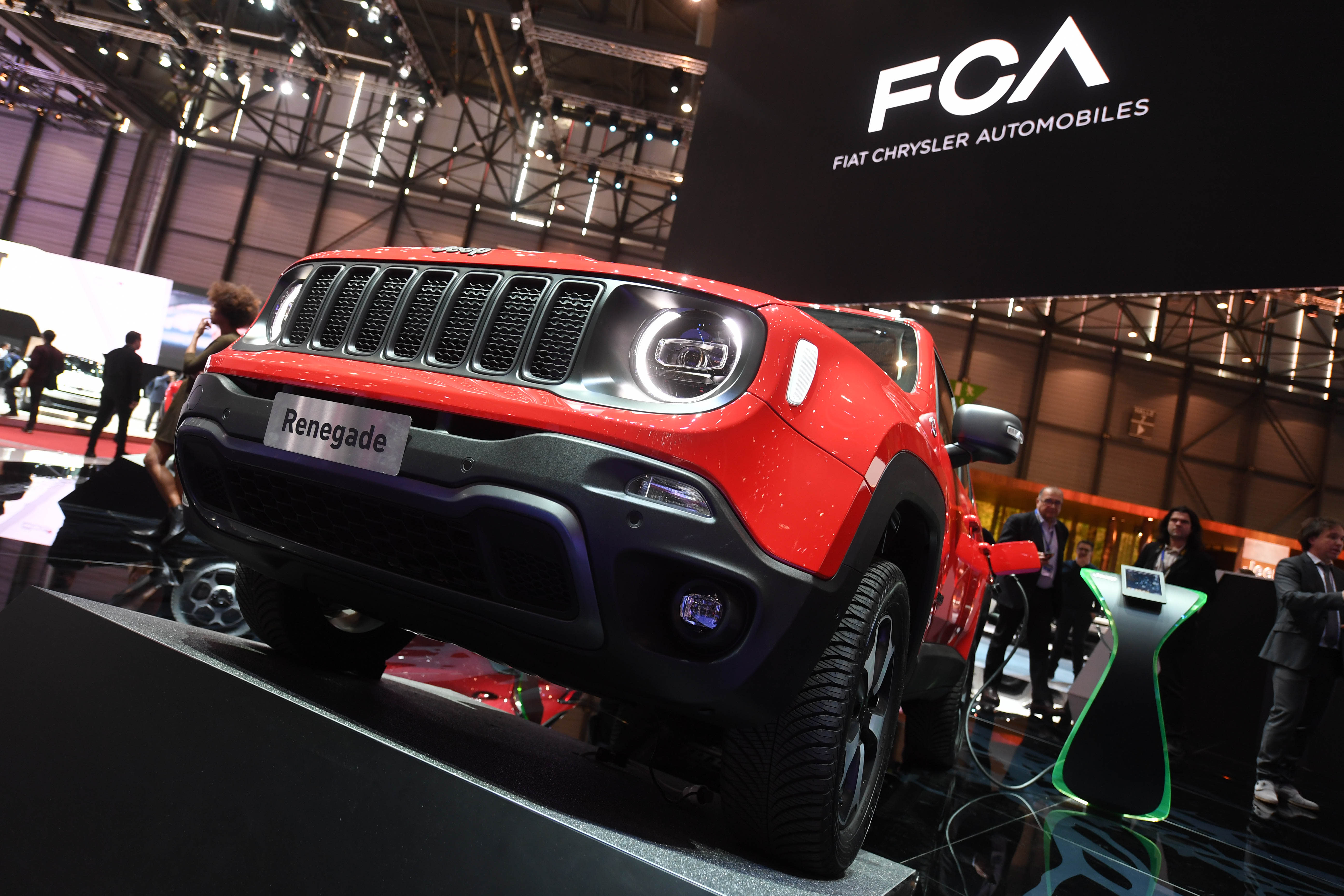
A Jeep Renegade 4x4 e is presented at the Geneva Motor Show March 5, 2019. Signage in the background says"'FCA Fiat Chrysler Automobiles," to which Jeep belongs.
Uli Deck | picture alliance | Getty Images
Peugeot (PSA) and Fiat Chrysler (FCA) confirmed their intention to merge on Thursday, in what would be a 50-50 share swap and create the world's fourth-largest carmaker.
The new company's shares will be listed in New York, Paris and Milan with FCA's John Elkann becoming the chairman and Peugeot's Carlos Tavares becoming the CEO. The proposed tie-up would reportedly create an industry behemoth with 8.7 million vehicle sales, $190 billion in turnover and a combined 400,000 employees.
"Discussions have opened a path to the creation of a new group with global scale and resources owned 50% by Groupe PSA shareholders and 50% by FCA shareholders," they said in a joint statement on Thursday morning.
"In a rapidly changing environment, with new challenges in connected, electrified, shared and autonomous mobility, the combined entity would leverage its strong global R&D (research and development) footprint and ecosystem to foster innovation and meet these challenges with speed and capital efficiency."
Early reports of the merger talks — which would create a new group worth roughly $50 billion — have moved share prices for both automakers this week. Italy's Fiat Chrysler saw its stock surge as much as 8% on Tuesday and added another 5% on Wednesday. Peugeot shares actually fell 8.8% as markets opened in Europe on Thursday.
Executives at the firms have briefed regulators in the U.S. and France, the Wall Street Journal reported, citing unnamed sources. The confirmation of the deal comes about five months after Fiat Chrysler ended merger discussions with PSA's French rival, Renault. However, this new merger is unlikely to face the same interference from the French government with some positive comments already emanating from Paris.
French Finance Minister Bruno Le Maire said in a statement that he welcomed the deal but said France would be particularly vigilant on the preservation of its industrial footprint in the country and the location of its head offices.
"This merger is a response to the automotive sector's need to consolidate in order to face the challenges of mobility in the future," he said in a statement Thursday, according to a CNBC translation.
"France should be proud of its car industry which has demonstrated its capacity for research and technological innovation, particularly in the fields of electric and hybrid (vehicles)."
The new boards are now expected to finalize discussions over the coming weeks and draw up and a memorandum of understanding.
Prior the competition of the deal, FCA said it would distribute to its shareholders a special dividend of 5.5 billion euros, as well as its shareholding in subsidiary Comau. Peugeot said it would distribute to its shareholders its 46% stake in automotive supplier Faurecia.
"The proposal would be submitted to the information and consultation process of the relevant employee bodies, and would be subject to customary closing conditions, including final board approvals of the binding Memorandum of Understanding and agreement on definitive documentation," the joint statement concluded.
—CNBC's Michael Wayland and Phil LeBeau contributed to this article.

A Jeep Renegade 4x4 e is presented at the Geneva Motor Show March 5, 2019. Signage in the background says"'FCA Fiat Chrysler Automobiles," to which Jeep belongs.
Uli Deck | picture alliance | Getty Images
Peugeot (PSA) and Fiat Chrysler (FCA) confirmed their intention to merge on Thursday, in what would be a 50-50 share swap and create the world's fourth-largest carmaker.
The new company's shares will be listed in New York, Paris and Milan with FCA's John Elkann becoming the chairman and Peugeot's Carlos Tavares becoming the CEO.
"Discussions have opened a path to the creation of a new group with global scale and resources owned 50% by Groupe PSA shareholders and 50% by FCA shareholders," they said in a statement on Thursday morning.
"In a rapidly changing environment, with new challenges in connected, electrified, shared and autonomous mobility, the combined entity would leverage its strong global R&D (research and development) footprint and ecosystem to foster innovation and meet these challenges with speed and capital efficiency."
Early reports of the merger talks — which would create a new group worth roughly $50 billion — have moved share prices for both automakers this week. Fiat Chrysler stock surged as much as 8% on Tuesday and added another 5% on Wednesday.
The PSA board has already approved the merger and the Fiat Chrysler board met on Wednesday. Executives have briefed regulators in the U.S. and France, the Wall Street Journal reported, citing unnamed sources.
The confirmation of the deal comes about five months after Fiat Chrysler ended merger discussions with PSA's French rival, Renault. However, this new merger is unlikely to face the same interference from the French government with some positive comments already emanating from Paris.
—CNBC's Michael Wayland and Phil LeBeau contributed to this article.

Check out the companies making headlines before the bell:
General Electric – General Electric reported quarterly profit of 15 cents per share, 4 cents a share above estimates. Revenue also exceeded forecasts and GE raised its full-year cash flow forecast.
Yum Brands – Yum earned an adjusted 80 cents per share for its latest quarter, 14 cents a share shy of consensus forecasts. Revenue also came in below estimates, hurt by a weaker-than-expected performance at its Pizza Hut and KFC units.
Anixter International – The software company agreed to be acquired by private-equity firm Clayton, Dubilier & Rice for $81 per share in cash. The total value of the deal is $3.8 billion including assumed debt, with the transaction expected to close by the end of 2020's first quarter.
Molson Coors – The beer brewer fell a penny a share short of estimates, with quarterly profit of $1.48 per share. Revenue also came in short of forecasts and Molson Coors announced a restructuring that will slash up to 500 jobs.
Garmin – The GPS and fitness device maker earned $1.19 per share for its latest quarter, well above the 95 cents a share consensus estimate. Revenue also topped forecasts. Garmin saw better-than-expected results in all its units, as well as higher-than-expected profit margins.
Tupperware – Tupperware earned an adjusted 43 cents per share, well short of the 62 cents a share consensus estimate. The housewares maker's revenue also came in short of forecasts. The company said it was experiencing challenging trends in markets like the U.S., China, Canada, and Brazil. Tupperware also cut its full-year earnings outlook.
Johnson & Johnson – J&J said its testing found no asbestos in its Johnson's Baby Powder. That testing included a single bottle that the Food and Drug Administration had said contained trace amounts of asbestos, prompting J&J to recall a lot of 33,000 bottles earlier this month.
Fiat Chrysler – Fiat Chrysler said it was in talks about a possible merger with Peugeot maker PSA that could create a combined company worth about $50 billion. Fiat Chrysler had abandoned talks earlier this year to merge with France's Renault.
Amgen – Amgen reported quarterly profit of $3.66 per share, 13 cents a share above estimates. The biotech company's revenue also beat forecasts and Amgen raised its full-year guidance amid strong sales of its biosimilar drugs.
Electronic Arts – Electronic Arts reported quarterly profit of 96 cents per share, 10 cents a share above estimates. The video game maker's revenue also topped estimates. Electronic Arts saw stronger digital sales, including game downloads and in-game purchases.
Mattel – Mattel came in 10 cents a share above estimates, with quarterly profit of 26 cents per share. The toy maker's revenue was slightly above Wall Street forecasts. Mattel also said it is restating some past earnings following an internal investigation into accounting issues, and the company's chief financial officer is resigning.
Mondelez International – Mondelez reported quarterly profit of 64 cents per share, 4 cents a share above estimates. Revenue was slightly above forecasts. The snack maker raised its full-year outlook, as sales volume increases across its major markets.
FireEye – FireEye raised its annual revenue guidance, after doubling estimates by reporting quarterly profit of 2 cents per share. The cybersecurity company's revenue also beat forecasts as it sold more cloud subscriptions.
Advanced Micro Devices – AMD reported adjusted earnings of 18 cents per share, in line with Street forecasts. Revenue was very slightly below estimates, although the chipmaker reported better-than-expected results for its data center business.
Yum China – Yum China beat analyst estimates by 3 cents A share, with quarterly profit of 58 cents per share. The restaurant operator's revenue was below forecasts, however, as were comparable-restaurant sales at KFC, Pizza Hut, and Taco Bell.
Sony – Sony reported its best-ever second-quarter profit, driven by strong sales of its image sensors. Sales helped offset a drop in earnings from Sony's gaming division.
Edison International – Edison's Southern California Edison unit said its equipment will likely be found to have been associated with a 2018 California wildfire that damaged more than 1,000 homes in Los Angeles and Ventura counties.

PSA Group, the French owner of Peugeot, is exploring a merger with its US-Italian rival Fiat Chrysler, it has confirmed.
A deal between the two carmakers would create a business with a combined market value of nearly $50bn (£39.9bn).
This is Fiat Chrysler's second attempt at a merger this year after it pulled out of an agreement with Renault in June.
Fiat Chrysler shares jumped 7.5% on Wall Street.
The potential merger would face significant political and financial hurdles.
Discussions remain in the early stages and there is no guarantee of a final deal.
However, if the two companies do combine, PSA chief executive Carlos Tavares is expected to lead the enlarged group.
John Elkann, Fiat Chrysler's chairman and the head of Italy's Agnelli industrial dynasty which controls the business, would retain the same position at the new company.
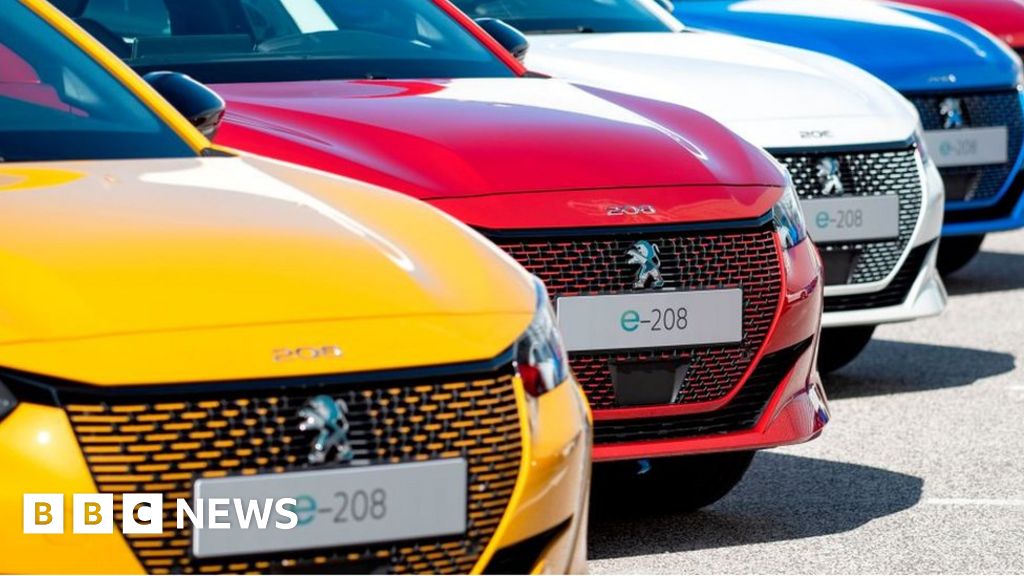
A merger of the two groups would bring a number of brands under one roof including Alfa Romeo, Citroen, Jeep, Opel, Peugeot and Vauxhall.
The talks come months after a proposed tie-up between Fiat Chrysler and French carmaker Renault collapsed.
Fiat Chrysler had described its bid for Renault as a "transformative" proposal that would create a global automotive leader.
Industry shifts toward electric models, along with stricter emissions standards and the development of new technologies for autonomous vehicles, have put increasing pressure on carmakers to consolidate.

PSA Group, the French owner of Peugeot, is exploring a merger with its US-Italian rival Fiat Chrysler, it has confirmed.
A deal between the two carmakers would create a business with a combined market value of nearly $50bn (£39.9bn).
This is Fiat Chrysler's second attempt at a merger this year after it pulled out of an agreement with Renault in June.
Fiat Chrysler shares jumped 7.5% on Wall Street.
The potential merger would face significant political and financial hurdles.
Discussions remain in the early stages and there is no guarantee of a final deal.
However, if the two companies do combine, PSA chief executive Carlos Tavares is expected to lead the enlarged group.
John Elkann, Fiat Chrysler's chairman and the head of Italy's Agnelli industrial dynasty which controls the business, would retain the same position at the new company.
A merger of the two groups would bring a number of brands under one roof including Alfa Romeo, Citroen, Jeep, Opel, Peugeot and Vauxhall.
The talks come months after a proposed tie-up between Fiat Chrysler and French carmaker Renault collapsed.
Fiat Chrysler had described its bid for Renault as a "transformative" proposal that would create a global automotive leader.
Industry shifts toward electric models, along with stricter emissions standards and the development of new technologies for autonomous vehicles, have put increasing pressure on carmakers to consolidate.

PSA Group, the French owner of Peugeot, is exploring a merger with its US-Italian rival Fiat Chrysler, it has confirmed.
A deal between the two carmakers would create a business with a combined market value of nearly $50bn (£39.9bn).
This is Fiat Chrysler's second attempt at a merger this year after it pulled out of an agreement with Renault in June.
Fiat Chrysler shares jumped 7.5% on Wall Street.
The potential merger would face significant political and financial hurdles.
Discussions remain in the early stages and there is no guarantee of a final deal.
However, if the two companies do combine, PSA chief executive Carlos Tavares is expected to lead the enlarged group.
John Elkann, Fiat Chrysler's chairman and the head of Italy's Agnelli industrial dynasty which controls the business, would retain the same position at the new company.
A merger of the two groups would bring a number of brands under one roof including Alfa Romeo, Citroen, Jeep, Opel, Peugeot and Vauxhall.
The talks come months after a proposed tie-up between Fiat Chrysler and French carmaker Renault collapsed.
Fiat Chrysler had described its bid for Renault as a "transformative" proposal that would create a global automotive leader.
Industry shifts toward electric models, along with stricter emissions standards and the development of new technologies for autonomous vehicles, have put increasing pressure on carmakers to consolidate.

PSA Group, the French owner of Peugeot, is exploring a merger with its US-Italian rival Fiat Chrysler, it has confirmed.
A deal between the two carmakers would create a business with a combined market value of nearly $50bn (£39.9bn).
This is Fiat Chrysler's second attempt at a merger this year after it pulled out of an agreement with Renault in June.
Fiat Chrysler shares jumped 7.5% on Wall Street.
The potential merger would face significant political and financial hurdles.
Discussions remain in the early stages and there is no guarantee of a final deal.
However, if the two companies do combine, PSA chief executive Carlos Tavares is expected to lead the enlarged group.
John Elkann, Fiat Chrysler's chairman and the head of Italy's Agnelli industrial dynasty which controls the business, would retain the same position at the new company.
A merger of the two groups would bring a number of brands under one roof including Alfa Romeo, Citroen, Jeep, Opel, Peugeot and Vauxhall.
The talks come months after a proposed tie-up between Fiat Chrysler and French carmaker Renault collapsed.
Fiat Chrysler had described its bid for Renault as a "transformative" proposal that would create a global automotive leader.
Industry shifts toward electric models, along with stricter emissions standards and the development of new technologies for autonomous vehicles, have put increasing pressure on carmakers to consolidate.

PSA Group, the French owner of Peugeot, is exploring a merger with its US-Italian rival Fiat Chrysler, it has confirmed.
A deal between the two carmakers would create a business with a combined market value of nearly $50bn (£39.9bn).
This is Fiat Chrysler's second attempt at a merger this year after it pulled out of an agreement with Renault in June.
Fiat Chrysler shares jumped 7.5% on Wall Street.
The potential merger would face significant political and financial hurdles.
Discussions remain in the early stages and there is no guarantee of a final deal.
However, if the two companies do combine, PSA chief executive Carlos Tavares is expected to lead the enlarged group.
John Elkann, Fiat Chrysler's chairman and the head of Italy's Agnelli industrial dynasty which controls the business, would retain the same position at the new company.
A merger of the two groups would bring a number of brands under one roof including Alfa Romeo, Citroen, Jeep, Opel, Peugeot and Vauxhall.
The talks come months after a proposed tie-up between Fiat Chrysler and French carmaker Renault collapsed.
Fiat Chrysler had described its bid for Renault as a "transformative" proposal that would create a global automotive leader.
Industry shifts toward electric models, along with stricter emissions standards and the development of new technologies for autonomous vehicles, have put increasing pressure on carmakers to consolidate.

PSA Group, the French owner of Peugeot, is exploring a merger with its US-Italian rival Fiat Chrysler, it has confirmed.
A deal between the two carmakers would create a business with a combined market value of nearly $50bn (£39.9bn).
This is Fiat Chrysler's second attempt at a merger this year after it pulled out of an agreement with Renault in June.
Fiat Chrysler shares jumped 7.5% on Wall Street.
The potential merger would face significant political and financial hurdles.
Discussions remain in the early stages and there is no guarantee of a final deal.
However, if the two companies do combine, PSA chief executive Carlos Tavares is expected to lead the enlarged group.
John Elkann, Fiat Chrysler's chairman and the head of Italy's Agnelli industrial dynasty which controls the business, would retain the same position at the new company.
A merger of the two groups would bring a number of brands under one roof including Alfa Romeo, Citroen, Jeep, Opel, Peugeot and Vauxhall.
The talks come months after a proposed tie-up between Fiat Chrysler and French carmaker Renault collapsed.
Fiat Chrysler had described its bid for Renault as a "transformative" proposal that would create a global automotive leader.
Industry shifts toward electric models, along with stricter emissions standards and the development of new technologies for autonomous vehicles, have put increasing pressure on carmakers to consolidate.

SYDNEY, Australia — Australian regulators on Tuesday accused Google of misleading consumers about its collection of their personal location information through its Android mobile operating system, the latest government action against a tech company over its handling of vast quantities of user data.
The Australian Competition and Consumer Commission alleged in a lawsuit that Google falsely led users to believe that disabling the “Location History” setting on Android phones would stop the company from collecting their location data. But users were actually required to also turn off a second setting, “Web and App Activity,” that was enabled by default.
Google did not properly disclose the need to disable both settings from January 2017 until late 2018, the suit alleges. The company changed its user guidance after The Associated Press revealed in August 2018 that it was continuing to collect the data even after the Location History setting was switched off.
The commission also said that while Google made it clear to users what features they would lose by turning off location services, the company did not inform them adequately about what it would do with the data collected.
“This is part of a system of not being able to make informed choices about what’s being done with your data,” said Rod Sims, the commission’s chairman.
Mr. Sims called the lawsuit the first of its kind by a national government against a tech company over its use of personal data. The agency is seeking what he called significant financial penalties against Google, among other corrective measures. He added that he hoped the case would raise awareness among consumers over how much data is being collected.
“We need to be getting ahead of them, because this is a whole new world,” he said of data collection issues.
A Google spokeswoman said in a statement that the company was reviewing the allegations. She said Google would continue to engage with the commission over its concerns but intended to defend itself.
The action by Australian regulators comes as governments and consumer groups around the world have expressed growing concern about the power of tech companies, including their collection of personal data from devices that are indispensable to the lives of billions of people.
Consumer groups from several European countries had already sued Google over the location tracking issue under a comprehensive data privacy law adopted in Europe last year. Under that law, a French agency fined Google 50 million euros, or about $55 million, in January for not properly disclosing to users how it collected data to create personalized ads.
In the United States, regulators approved a $5 billion fine against Facebook this year over its role in allowing Cambridge Analytica, a political data firm hired by President Trump’s 2016 election campaign, to gain access to private information on more than 50 million Facebook users.
While Google has made changes to Android in later iterations that limit the location data it gathers, the business incentives for collecting as much personal data as possible remain great. Location-targeted advertising is worth an estimated $21 billion a year, and Google, along with Facebook, dominates the mobile ad market.
The Australian lawsuit is in part the product of a 19-month investigation by the consumer commission into the market power of Google and Facebook. It issued 23 recommendations, including an overhaul of privacy laws, to limit their reach and force them to take more responsibility for the content they disseminate.
The Australian government has also passed legislation challenging the power of tech companies, including a law in 2018 that compelled tech-industry giants to disable encryption. And under a new law criminalizing “abhorrent violent material” online, Australia is using the threat of fines and jail time to pressure platforms like Facebook to block such content, and it is moving to take down websites that hold any illegal content.

Storage tanks are seen at the North Jiddah bulk plant, an Aramco oil facility, in Jiddah, Saudi Arabia, Sunday, Sept. 15, 2019.
Amr Nabil | AP
DUBAI — Saudi state-owned oil giant Aramco is planning to announce the start of its long-anticipated public offering on Sunday November 3, Reuters reported Tuesday, citing three sources with direct knowledge of the matter.
State broadcaster Al Arabiya reported that shares of the company will begin trading on the Tadawul, Saudi Arabia's stock exchange, on December 11. The local outlet also said Aramco aims to announce the transaction price on November 17 with a final IPO price announcement planned for December 4.
Aramco and the Tadawul did not immediately reply to CNBC requests for comment. In a comment to Reuters, Aramco said it "does not comment on rumor or speculation. The company continues to engage with the shareholders on IPO readiness activities. The company is ready and timing will depend on market conditions and be at a time of the shareholders' choosing."
The reports come as the kingdom kicks off its Future Investment Initiative (FII), an annual showcase of its investment opportunities, attended by major international investors and state officials.
Speculation and delayed announcements on the public listing of the world's largest company have riveted investors and market watchers since plans for the float were first disclosed three years ago. The oil giant has delayed the IPO — originally scheduled for 2018 — multiple times, reportedly over Saudi concerns about public scrutiny over its finances and because of the complexity of its corporate structure. The listing would be the largest public offering in history.
The kingdom reportedly plans to list 1% of Aramco on its local stock exchange before the end of this year and another 1% in 2020, as first steps ahead of a public sale of roughly 5% of the company.
Speaking at the FII on Tuesday, Saudi Public Investment Fund Governor Yasir al-Rumayyan said that the prior separation of Aramco from the kingdom's sprawling energy ministry was to avoid a conflict of interest, and told attendees that Aramco will have more institutional shareholders "soon."
The Aramco listing would aim to drum up cash for a government looking to significantly reduce its budget deficit and diversify its economy beyond oil as part of Crown Prince Mohammed bin Salman's Vision 2030.
—CNBC's Emma Graham contributed to this article.
MarketWatch First Take
By Therese Poletti
Published: Oct 28, 2019 8:51 pm ET
The cost of new hires and real estate added up for Google last quarter.
Alphabet Inc.’s big earnings shortfall was not just the result of its equity investment losses: Continued heavy spending on hiring and real estate by the internet search and advertising behemoth also played a role.
Google’s parent company reported third-quarter profit far lower than Wall Street’s estimates Monday afternoon. Alphabet GOOG+1.97% GOOGL+1.95% reported net income of $7.07 billion, or $10.12 a share, a year-over-year profit decline of more than 22% that missed estimates by nearly 18%. The stock fell by more than 1% in after-hours trading following the results.
Full earnings results: Alphabet earnings miss estimates, driving shares down
Alphabet executives blamed the profit decline on free spending, a longtime habit for Google that has declined since Chief Financial Officer Ruth Porat arrived from Wall Street. That is the same reason another big name in tech, Amazon.com Inc. AMZN+0.89% gave for its earnings downturn this year, as the two companies battle in new arenas — such as Amazon’s growing ad business and Google’s rising enterprise-cloud offering — for a more promising future.
Hiring was a big part of Google’s spending, Porat said in Monday’s conference call, along with investments in cloud data centers and offices to house all the new employees. Alphabet added 19,724 workers in the past year, and 6,450 in the third quarter.
“Head-count growth on an absolute basis in the third quarter was unusually high, reflecting the addition of new college hires,” Porat said, while promising that employee count will “be in line with growth in 2018.”
The company also said it spent $7.2 billion on capital expenditures, up from $5.3 billion a year ago. The spending this quarter included building out data centers and spending on new offices and campuses in the Bay Area and in Seattle. Technical infrastructure, such as data-center technology, accounted for only 60% of capex in the quarter, Porat said.
“Investments in office facilities included the $1 billion acquisition of a portfolio of buildings in Sunnyvale and in the purchase of two buildings to expand our presence in the Seattle area,” the CFO said.
Going forward, however, Porat said she expects that the primary driver of its capital expenditures will continue to be expanding its data centers and increasing the compute requirements to support machine learning, cloud search and YouTube.
Compared with Google’s rival in Seattle, Alphabet’s spending still seems anemic. Amazon added nearly 100,000 employees in the third quarter, which means that it hired roughly as many people every week as Alphabet did in the entire quarter. It also said it spent $4.7 billion in the quarter on purchases of property and equipment, which ostensibly includes its data center and warehouse build-outs.
Neither company has made a big splash in acquisitions recently, though Alphabet is reportedly eyeing a well-known name: Fitbit Inc. FIT+30.86% . Reuters on Monday reported that Alphabet was considering purchasing the wearables company to round out its growing hardware offerings, which could lead to a lot more money heading out the door.
Alphabet definitely was on a big spending spree last quarter, and it is worthwhile to keep an eye on Google’s costs as potential antitrust litigation becomes a bigger factor in the next year or two. But if the tech titans are going to keep spending amid tariff fears and whispers of the end of the current tech boom, investing in the future is a much better target than even more stock repurchases.
See original version of this story


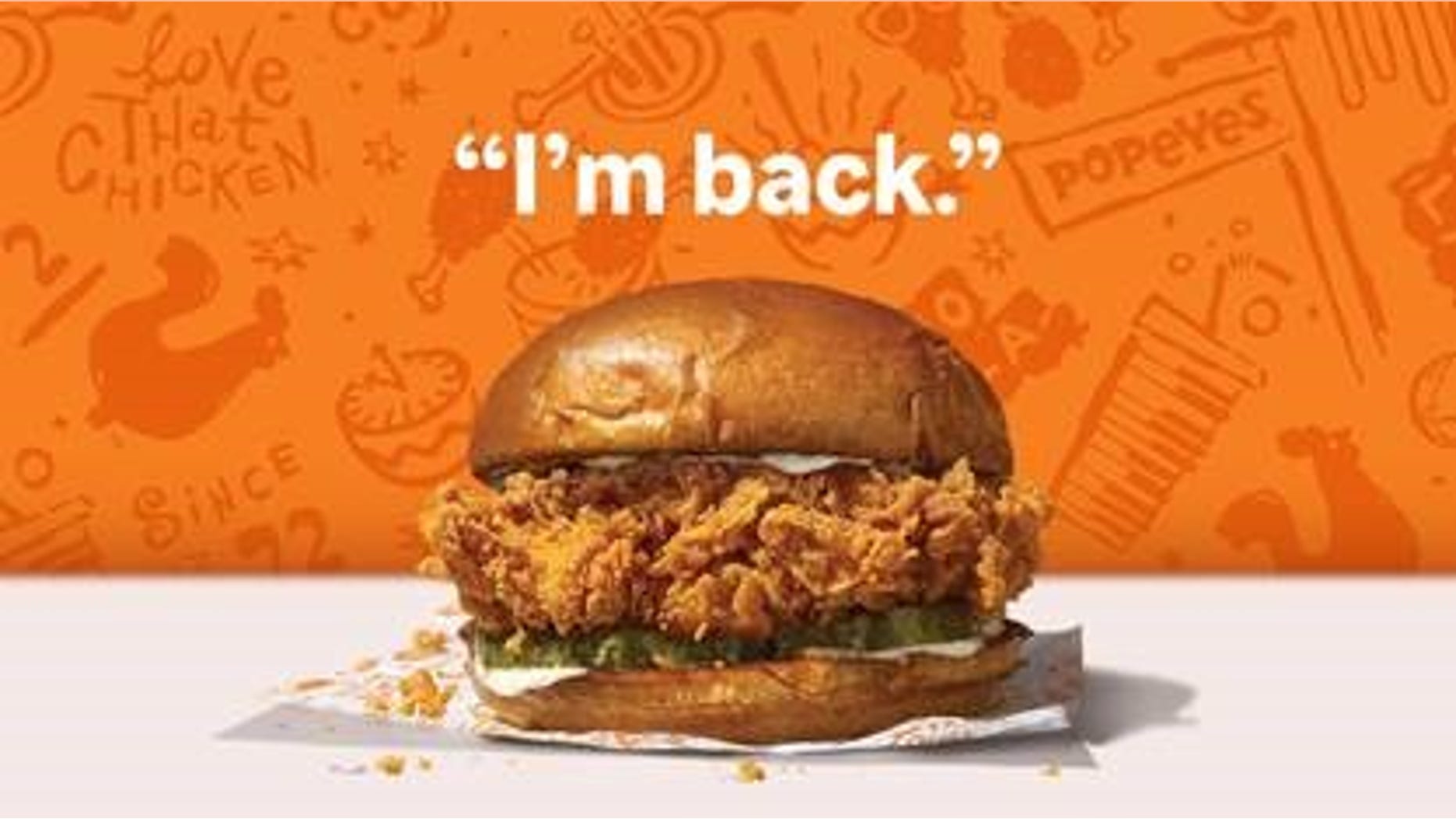
November 3 is the official return for the fast food chain's beloved, yet short-lived, sandwich. (Popeyes)
Have you heard the word? Popeyes' highly anticipated (and ridiculed and sexy) chicken sandwich, which sold out just two weeks after its debut, is officially returning to stores in early November.
November 3 to be exact.
POPEYES TEASES 'BRING YOUR OWN BUN' CAMPAIGN, SUGGESTS CUSTOMERS MAKE THEIR OWN SANDWICHES
Popeyes' press release confirming the news was as simple as the chicken sandwich itself, and contained only two words: “I’m Back.”
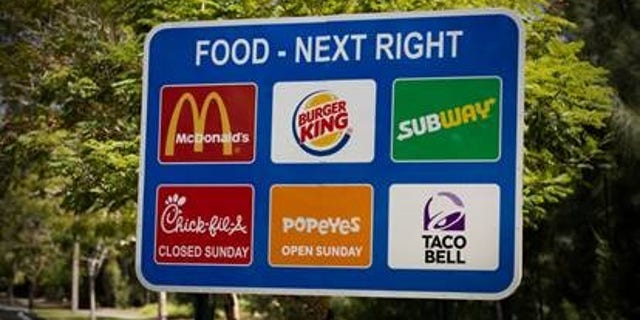
Franchise owners had tipped their hand about the sandwich’s comeback last week, but the fast-food chain only confirmed the nationwide return in the Monday press release. Popeyes also debuted an advertisement for the sandwich's return that takes aim at its now-competitor Chick-fil-A, and the unavailability of their chicken sandwiches on Sundays.
The sandwich, which most fast-foodies are very much aware of at this point, was released in August and sold out two weeks later. It was then removed from menus across the nation while fans waited for the chain to announce a return date.
CLICK HERE TO GET THE FOX NEWS APP
During that time, the sandwich sparked a Twitter beef between Chick-fil-A — which Popeyes seems intent on drawing out, according to its new marketing campaign — as well as an intense "Chicken War" that eventually grew to involve Buffalo Wild Wings and Wendy's.

Popeyes appears to be taking its beef with Chick-fil-A out of the kitchen and onto the streets. (Popeyes)
CLICK HERE TO SIGN UP FOR OUR LIFESTYLE NEWSLETTER
For those unfamiliar, the sandwich at the center of this controversy features a breaded chicken filet on a brioche bun, with pickles and either mayo or spicy Cajun spread.
And it can (maybe) be yours stating Nov. 3 — because if history tells us anything, you might want to get there sooner rather than later.
FOLLOW US ON FACEBOOK FOR MORE FOX LIFESTYLE NEWS

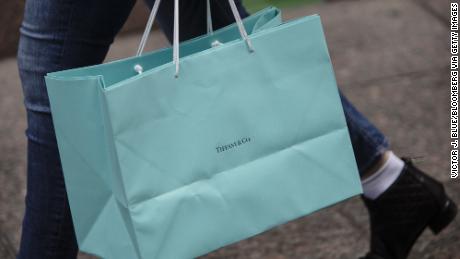
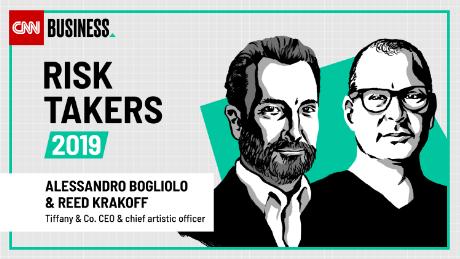
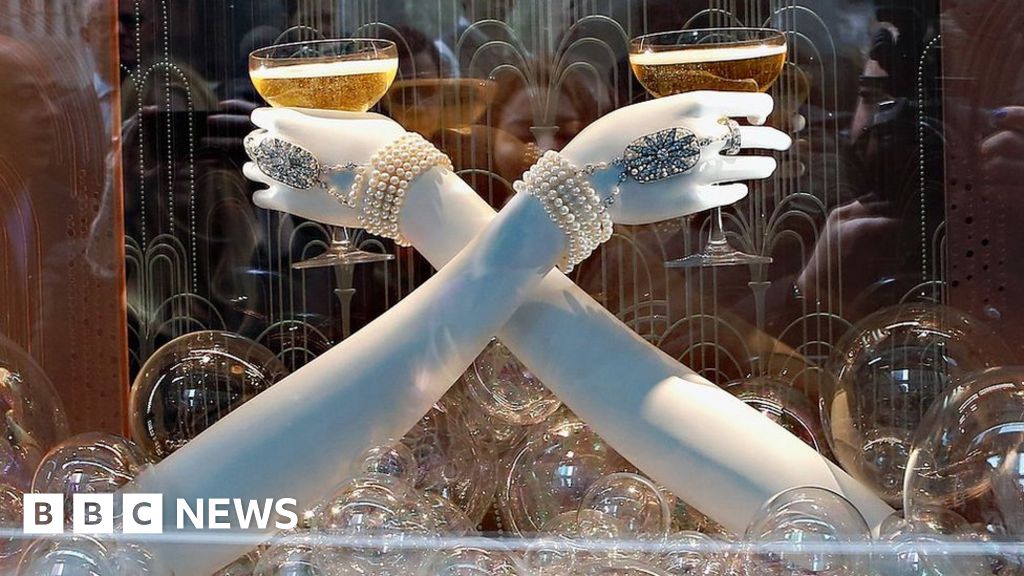
Luxury goods firm Louis Vuitton (LVMH) has confirmed it has held "preliminary discussions" about buying US jeweller Tiffany,
The statement followed reports that LVMH had made a $14.5bn (£11.3bn) offer to buy the company.
"The LVMH Group confirms that it has held preliminary discussions regarding a possible transaction with Tiffany," it said.
LVMH is owned by France's richest man, Bernard Arnault.
It produces a wide range of luxury goods including clothing, cosmetics, perfumes, drinks and fashion accessories, including its signature Louis Vuitton handbags.
It also owns brands such as Christian Dior, Givenchy and Kenzo, as well as many of the best-known champagne brands, including Dom Pérignon and Moët & Chandon.
Global demand for its products has held up well in recent years, but the same cannot be said for Tiffany, which has seen worldwide sales fall this year.
LVMH said there was "no assurance" that its talks with Tiffany would produce an agreement.
The announcement by LVMH came after media reports that the firm had submitted a preliminary, non-binding offer to Tiffany earlier this month.
The offer is said to value Tiffany at about $120 a share.
Analysts say LVMH is keen to expand in the US, where Tiffany is based.
LVMH has 75 brands, 156,000 employees and a network of more than 4,590 stores, while Tiffany employs more than 14,000 people and operates about 300 stores, including its flagship outlet on Fifth Avenue in New York.

Luxury goods firm Louis Vuitton (LVMH) has confirmed it has held "preliminary discussions" about buying US jeweller Tiffany,
The statement followed reports that LVMH had made a $14.5bn (£11.3bn) offer to buy the company.
"The LVMH Group confirms that it has held preliminary discussions regarding a possible transaction with Tiffany," it said.
LVMH is owned by France's richest man, Bernard Arnault.
It produces a wide range of luxury goods including clothing, cosmetics, perfumes, drinks and fashion accessories, including its signature Louis Vuitton handbags.
It also owns brands such as Christian Dior, Givenchy and Kenzo, as well as many of the best-known champagne brands, including Dom Pérignon and Moët & Chandon.
Global demand for its products has held up well in recent years, but the same cannot be said for Tiffany, which has seen worldwide sales fall this year.
LVMH said there was "no assurance" that its talks with Tiffany would produce an agreement.
The announcement by LVMH came after media reports that the firm had submitted a preliminary, non-binding offer to Tiffany earlier this month.
The offer is said to value Tiffany at about $120 a share.
Analysts say LVMH is keen to expand in the US, where Tiffany is based.
LVMH has 75 brands, 156,000 employees and a network of more than 4,590 stores, while Tiffany employs more than 14,000 people and operates about 300 stores, including its flagship outlet on Fifth Avenue in New York.

Fox News Contributor Deroy Murdock responds to minority hiring surpassing white hiring in August.
Later this week the government will release the monthly jobs report for October at a time when a new survey says business hiring is slowing.
Continue Reading Below
Hiring by U.S. companies has fallen to a seven-year low and fewer employers are raising pay, a business survey has found.
Just one-fifth of the economists surveyed by the National Association for Business Economics said their companies have hired additional workers in the past three months.
That is down from one-third in July. Job totals were unchanged at 69 percent of companies, up from 57 percent in July. A broad measure of job gains in the survey fell to its lowest level since October 2012.
GET FOX BUSINESS ON THE GO BY CLICKING HERE
The hiring slowdown comes as more businesses are reporting slower growth of sales and profits.
Business economists also expect the economy's growth to slow in the coming year, partly because tariffs have raised prices and cut into sales for many firms.
Perhaps because of concerns over a weakening economy, businesses are less likely to offer higher pay, even with unemployment at a 50-year low. Just one-third of economists said their firms had lifted pay in the past three months, down from more than half a year ago.
Companies are also cutting back on their investments in machinery, computers, and other equipment. The proportion of firms increasing their spending on such goods is at its lowest level in five years, the survey found.
WHERE ARE ALL THE JOBS? THESE SECTORS HIRED THE MOST IN SEPTEMBER
Sales are also growing more slowly. Just 39 percent of economists said they rose in the past three months, down from 61 percent a year earlier. And only 38 percent said they expect sales to rise in the next three months, also down from 61 percent a year ago.
Many business economists blamed President Trump's tariffs on steel, aluminum, and on most imports from China for worsening business conditions. Thirty-five percent said the duties have hurt their companies, while just 7 percent said they had a positive effect.
Of those who said tariffs had impacted their companies, 19 percent said they had lowered their sales and 30 percent said the duties pushed up costs.
The U.S. economy likely added 90 thousand new nonfarm jobs this month according to economists surveyed by Refinitiv, down 46 thousand from September’s tally of 136 thousand jobs. It would mark the slowest growth since the addition of 62 thousand payrolls in May, and would be well below the average monthly gain of 161 thousand this year.
Two-thirds of the economists surveyed now forecast that the economy will grow just 1.1 percent to 2 percent from the third quarter of 2019 through the third quarter of 2020.
A year ago, they were more bullish: Nearly three-quarters forecast growth of 2.1 percent to 3 percent from the third quarter of 2018 through the third quarter of 2019.
CLICK HERE TO READ MORE ON FOX BUSINESS
The NABE surveyed 101 economists at companies and trade associations from Sept. 26 through Oct. 14.
The Associated Press contributed to this article.